
ARTICLE | 5 Min
The Digital Product Passport in 2026: a key enabler for traceability and sustainability in Europe
Digital Product Passport for textiles: a revolution in the fashion industry
February 11, 2026
In this article
The fashion industry is undergoing a significant transformation driven by the need to adopt more sustainable and responsible practices.
One of the most disruptive developments in recent years is the implementation of the Digital Product Passport for textiles, a tool that provides comprehensive tracking of each garment, from its creation to its final disposal. This system is revolutionizing how brands and consumers interact with clothing, positioning itself as a crucial step toward a more responsible and ethical fashion industry, especially within the framework of key regulations like the European Green Deal and the ESPR (EcoDesign for Sustainable Products Regulation), which promote sustainability and the circular economy in the textile industry.
What is the Digital Product Passport for Textiles?
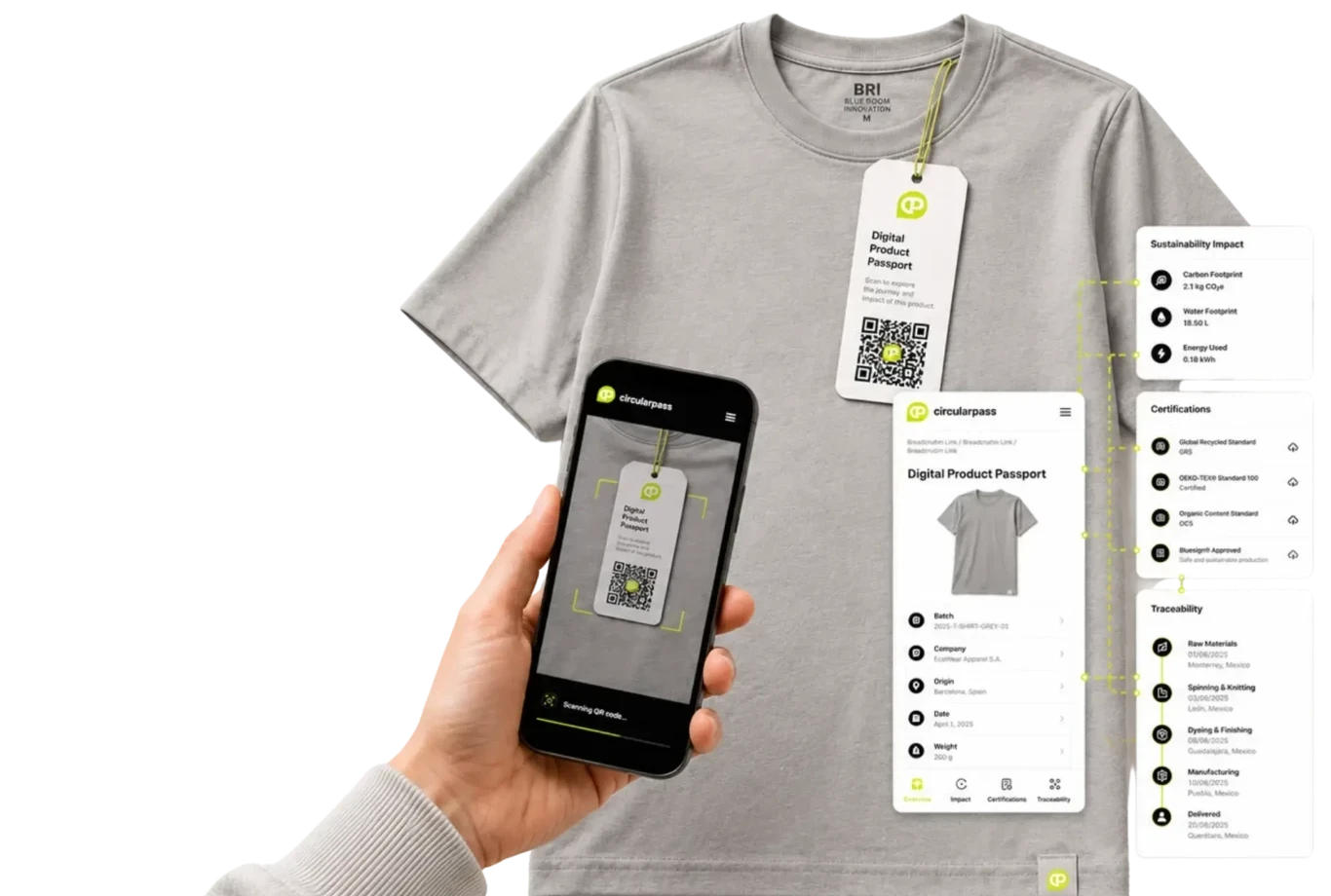
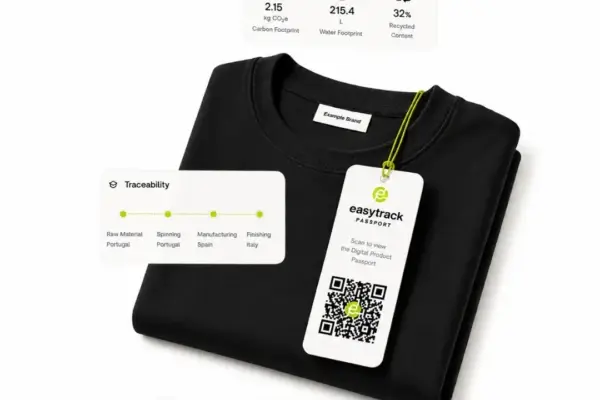
The digital product passport for textiles is a technology-based system that assigns a unique identifier to each garment, allowing it to register, track, and manage key information throughout its entire lifecycle. This tool not only offers traceability from production but also provides data on materials, labor conditions, environmental impact, and recycling best practices.
This concept fits into a broader movement known as the digital product passport, which applies across various industries, not just fashion. By integrating the digital product passport for textiles, brands can provide consumers with direct access to information about each garment, increasing transparency and encouraging more conscious consumption.
How Does the Digital Product Passport for Textiles work?
The digital product passport for textiles works by assigning a unique identifier to each garment, such as a QR code, NFC chip, or RFID. Through this identifier, consumers and companies can access key real-time data related to the garment's production, environmental impact, and lifecycle.
Here are the key details a digital product passport for textiles can include:
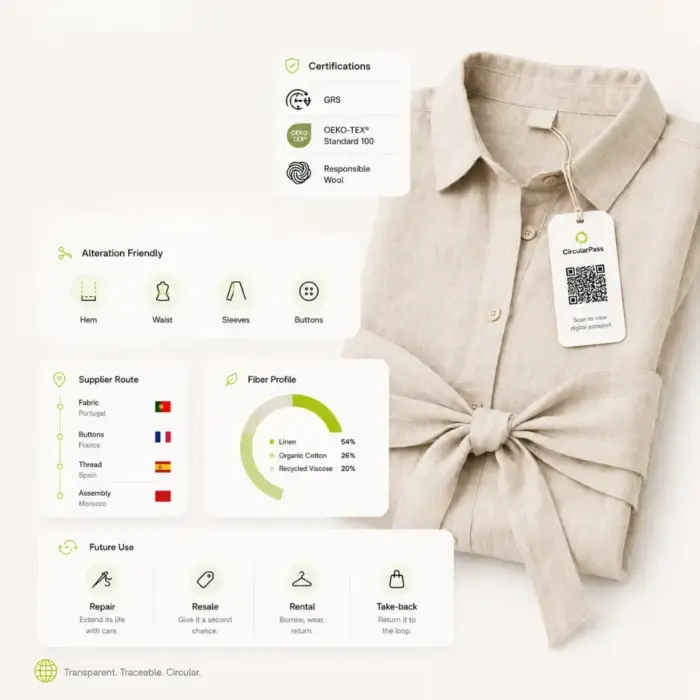
Composition of Materials: Each garment includes a detailed breakdown of the materials used (cotton, polyester, wool, etc.), their origin, whether they are organic or recycled, and if they meet international sustainability standards. This allows consumers to know if the garment is made from sustainable materials and if the brand is committed to the circular economy.
Production Information: This section provides information about the manufacturing processes used, including the types of dyes and chemicals applied, resource consumption, and the carbon footprint generated during production. It also includes details about labor conditions in the factories and whether industry ethical standards are met.
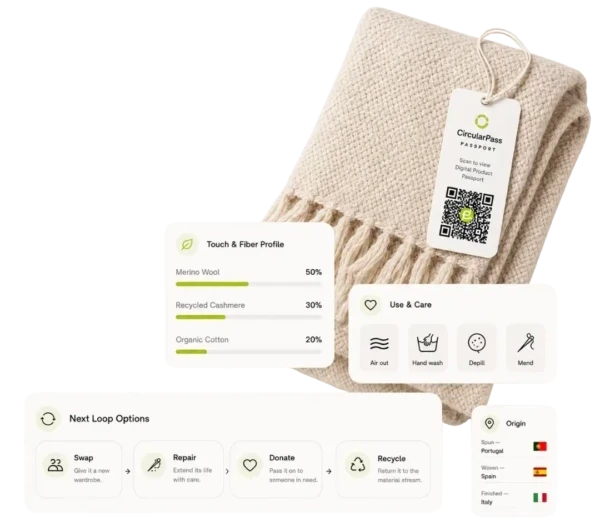
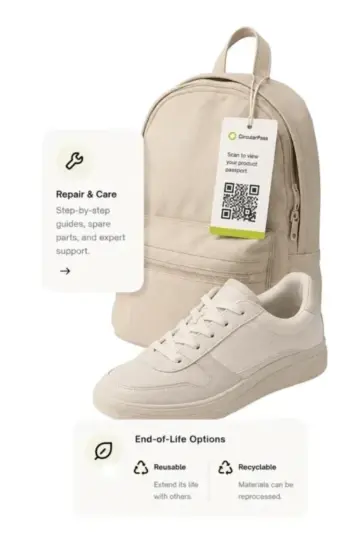
Traceability Throughout the Lifecycle: The digital passport provides details about the garment's durability and how it should be cared for to extend its lifespan. It also includes information on how to recycle it at the end of its life, helping consumers make informed decisions about recycling and reuse.
Environmental Impact: This is one of the most important elements of the digital product passport for textiles. It includes the water footprint used in garment production, the carbon footprint generated, and the chemicals used during manufacturing. Consumers have access to this information to understand the real environmental impact of each garment.
Certifications and Standards: It includes certifications related to sustainability, such as the Global Organic Textile Standard (GOTS), Fair Trade, OEKO-TEX, and others. This ensures that the garment meets ethical and environmental standards.
Repair and Reuse History: A digital product passport for textiles can also record any repairs made to the garment (such as zipper changes, stitching, or button replacements) and any transformations or reuse, such as upcycling. This feature promotes a circular economy, allowing garments to be reused rather than discarded.
Transparency in Distribution and Sales: Consumers can also access information about the transport used to move the garment from the factory to the point of sale. This section allows consumers to learn about the carbon footprint associated with garment transport and the emissions generated during its distribution.
Recycling and Disposal Information: Finally, the digital passport provides clear instructions on how to properly recycle the garment, including nearby recycling points and the type of recycling the garment can undergo, whether through material reuse or component recycling.
Advantages of the Digital Product Passport for Textiles in sustainable fashion
The implementation of the digital product passport for textiles offers a wide range of advantages for both brands and consumers:
- Complete Traceability: Consumers can learn the origins of their garments, from the choice of materials to the labor conditions of the workers who produced them. This promotes transparency and trust in brands.
- Waste Reduction: By providing detailed information on recycling and garment durability, the digital passport facilitates reuse and recycling, helping to reduce the amount of textile waste in landfills.
- Supply Chain Transparency: Brands can demonstrate that their products meet the highest sustainability standards, increasing credibility and consumer preference for environmentally conscious products.
- Logistics Optimization: By centralizing information about the garment, the digital passport improves supply chain efficiency, optimizing inventory management and reducing operational costs.
- Regulatory Compliance: The digital passport helps companies comply with international sustainability regulations, such as the European EcoDesign law, which requires products to be recyclable and reusable. In this way, the digital product passport for textiles becomes a key tool for brands seeking to align with regulatory initiatives like the European Green Deal and the ESPR regulation.
The future of the Digital Product Passport for Textiles
The adoption of the digital product passport for textiles is rapidly advancing, and it is expected to become a standard practice in the fashion industry in the coming years. With the growth of e-commerce and the increasing demand for more informed consumers, the digital product passport for textiles presents a key tool for increasing transparency in the industry.
In the future, technologies like blockchain may be integrated into the digital passport, providing an additional layer of security to ensure the immutability of data and strengthening consumer trust. This will allow each garment to be fully documented, with precise and verifiable information at every stage of its lifecycle.
Why is it crucial to adopt?
The fashion industry is one of the most polluting industries globally, and the need for sustainable practices is urgent. The digital product passport for textiles not only helps improve the traceability of garments but also promotes the responsible use of resources, reuse, and recycling, thus reducing environmental impact.
With consumers increasingly aware of the environmental impact of their purchases, brands that adopt the digital product passport for textiles will position themselves as sustainability leaders, gaining the preference of an increasingly demanding market.
How can textile companies start implementing the Digital Product Passport?
For many textile brands and manufacturers, the challenge is not only understanding the Digital Product Passport, but knowing how to start implementing it in a practical and scalable way. Product data is often spread across different departments, suppliers, spreadsheets, certifications, and production systems, making it difficult to create a reliable and structured passport from day one.
This is where solutions such as EasyTrack can help companies take the first step. EasyTrack provides a structured starting point for organizations that want to move towards the Digital Product Passport, combining expert guidance, a proven methodology, and the CircularPass technology platform. Through this approach, companies can identify the data they already have, detect gaps against upcoming regulatory requirements, and create a first functional Digital Product Passport prototype for a pilot product.
In the textile industry, this can be especially useful for brands that need to organize information related to material composition, origin, certifications, environmental impact, traceability events, care instructions, reuse, and recycling. Instead of trying to deploy a full-scale system from the beginning, companies can start with a controlled pilot, validate the data model, involve internal teams, and define a roadmap to scale the passport progressively across more products or collections.
By using EasyTrack, textile companies can reduce technological barriers, improve product data quality, and better prepare for regulatory frameworks such as ESPR and the Digital Product Passport requirements. It offers a practical way to transform scattered product information into a working digital passport, helping brands move from compliance uncertainty to a clearer, measurable action plan.
The digital product passport for textiles is revolutionizing the fashion industry by providing transparency, traceability, and sustainability to every garment. With this system, brands can demonstrate their commitment to sustainability, while consumers can make more responsible decisions. If fashion is to move toward a more sustainable and ethical future, the adoption of the digital passport is a critical step.
The future of fashion will be digital, circular, and transparent. The digital product passport for textiles is the key to transforming the industry and creating a more environmentally respectful model.
Related articles

February 2, 2026
Ecodesign Regulation for Sustainable Products (ESPR): what it requires and how to prepare for 2026
An overview of the ESPR Regulation, its requirements, implementation timeline and what companies need to prepare for 2026.

January 20, 2026
The Digital Product Passport in 2026: a key enabler for traceability and sustainability in Europe
What the Digital Product Passport is, why it becomes essential in 2026, and how companies can prepare for Europe’s new traceability standard.
May 12, 2026
EasyTrack: prepare your Digital Product Passport without starting from scratch
Discover how EasyTrack helps your company prepare its Digital Product Passport with a guided pilot, structured data, and a functional prototype.
Start your journey to supply chain transparency today
Discover Blue Room Innovation, the tech company powering CircularPass, where digital solutions meet environmental impact to build a smarter, more circular future.