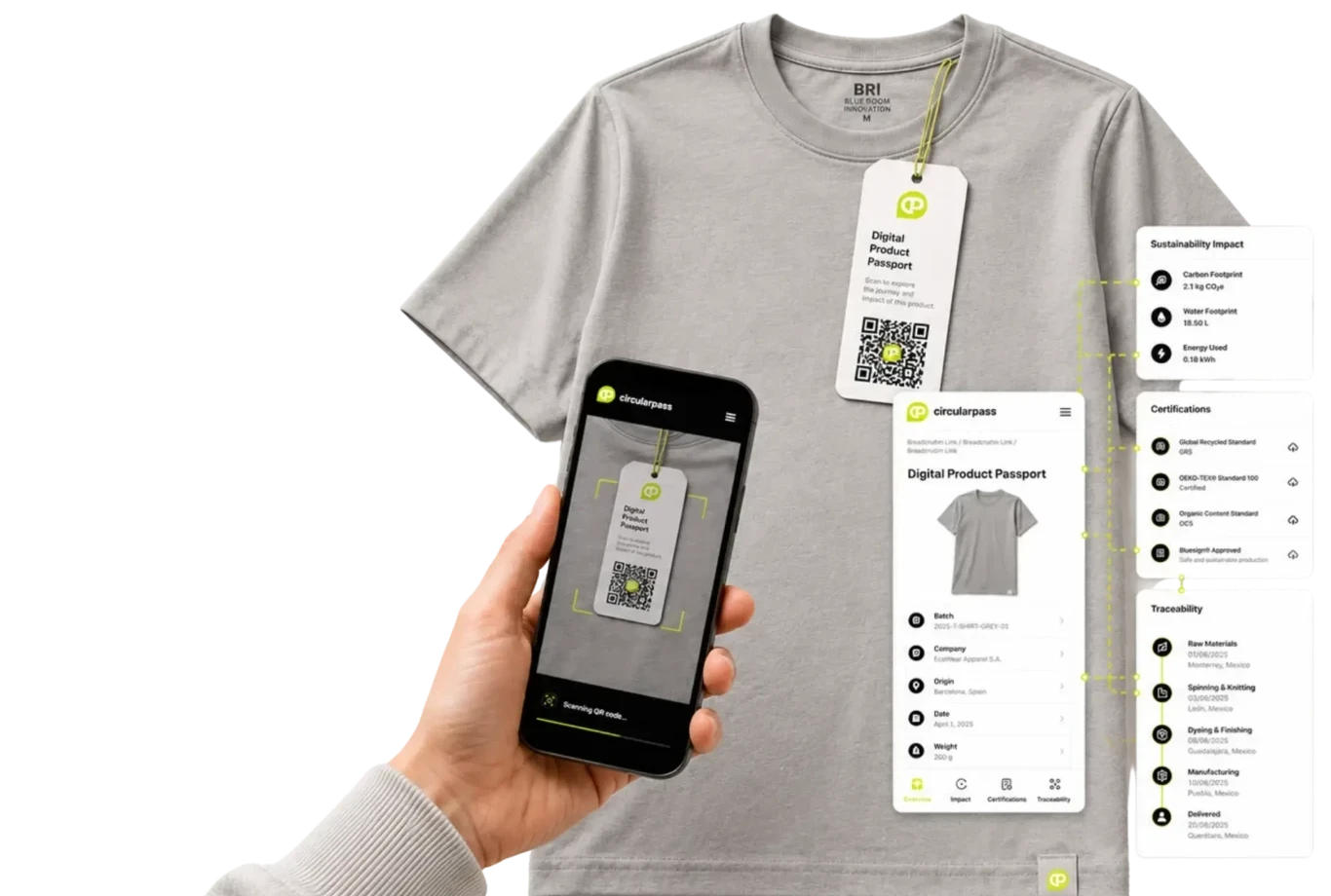

ARTICLE | 10 Min
Digital Product Passport for textiles: is your brand really ready?
October 15, 2026
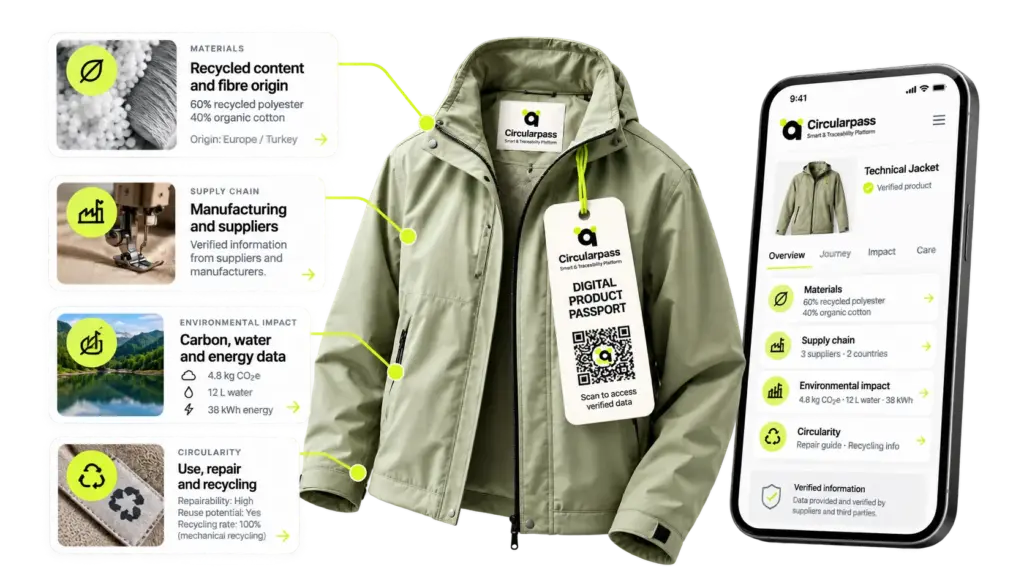
In this article
Your supplier confirms that the fabric used in your latest collection contains 60% recycled polyester. You have the certificate, the technical specifications and the information provided by your manufacturing partners. But if someone asked you to connect that claim to a specific garment and its production records, how easily could you demonstrate that the information is accurate?
For many textile companies, the answer is more complicated than expected. A single garment can involve several suppliers, manufacturing processes and materials sourced from different countries, making it difficult to maintain a complete picture of its journey from raw material to finished product.
As the European Union prepares to introduce the Digital Product Passport for Textiles, the ability to access and verify this information is becoming increasingly important. However, the challenge is not simply to digitize product documentation, but to rethink how information is managed throughout the textile value chain.
For fashion brands, manufacturers and importers, this raises a fundamental question: are your current processes ready to support the next generation of product transparency?
Do you really know what's behind every garment?
Consider a jacket made from recycled polyester, with a cotton lining and metal accessories. Its technical specifications may be stored in a product management system, while supplier certifications, material origin records and manufacturing documentation are managed separately.
Although the information exists, connecting it to the right product can become complicated, particularly when materials or suppliers change during production.
This is where textile traceability becomes essential. Companies need to be able to follow relevant product information across different stages of the supply chain while maintaining consistency between what was designed, what was manufactured and what ultimately reaches the market.
The Digital Product Passport is intended to make relevant product information more accessible to different stakeholders. Its effectiveness, however, depends on whether companies can maintain reliable records and connect them to the appropriate products.
For textile businesses, this means that preparing for a DPP begins with understanding their existing information flows and identifying where traceability can be improved.
Why the Digital Product Passport for textiles is changing EU Compliance
The European Union is introducing new requirements to support more sustainable and circular products through the Ecodesign for Sustainable Products Regulation (ESPR). Textile apparel has been identified as a priority product category.
The European Commission currently plans to adopt the textile-specific delegated act in the fourth quarter of 2027. The detailed DPP requirements and mandatory compliance dates have not yet been finalized.
The shift is significant because future EU compliance will involve making specified product information available in a structured and accessible format, rather than relying exclusively on documentation stored in separate systems.
However, textile companies should distinguish between preparing for expected requirements and assuming that every future obligation is already defined. The information that must be included in a textile DPP, as well as the applicable technical conditions, will depend on the final legislation.
Understanding this distinction allows businesses to make informed investments today while retaining the flexibility to adapt as the regulatory framework develops.
The challenge isn't creating a QR Code. It's managing what comes before it.
A QR code can connect a physical garment to its digital information, but the real operational challenge lies in keeping that information accurate as products and supply chains evolve.
Imagine a company manufacturing the same T-shirt over several seasons. Although its design and fibre composition remain unchanged, a new fabric supplier is introduced. The finished product may look identical, but the origin of its materials and the documentation supporting its characteristics may now be different.
If these changes are not reflected in the company's information systems, the digital record risks becoming outdated.
DPP implementation requires more than choosing a technology provider. Textile brands need clear processes for updating product information, coordinating suppliers and ensuring that records remain consistent throughout production.
From textile waste to new materials: the role of LIFE DPP-TEX
The importance of reliable product information becomes even clearer when we look at one of the textile industry's biggest challenges: turning discarded textiles into valuable new materials.
tonnes of recyclable post-industrial and post-consumer apparel and home textile waste could be available globally by 2030
TEXTILE EXCHANGE, OCT 2026
tonnes of recycled spinnable fibre are projected to actually be produced — a significant gap
PROJECTED OUTPUT
This gap highlights an important reality: having recyclable textile waste available does not necessarily mean it can be transformed into new textile fibres. Collection systems, material composition, contamination, recycling capacity and processing limitations all influence what can ultimately be recovered.
Access to reliable information about textile materials can help address part of this challenge. When manufacturers and recycling operators know what a product contains, they are better equipped to evaluate suitable recovery processes and make more informed decisions about its next use.
This is where the Digital Product Passport for Textiles can play a valuable role beyond regulatory compliance.
One initiative exploring this potential is LIFE DPP-TEX, a European Union co-funded project coordinated by Blue Room Innovation that aims to connect digital product information with real circular processes in the textile industry.
The project will adapt the CircularPass platform to textile value chains, combining information about material composition, fibre origin, recycled content and environmental performance with data relevant to reuse, repair and recycling.
To demonstrate its practical application, LIFE DPP-TEX will test the technology through two industrial pilots.
Home Textiles
Exploring how textile waste can be recovered and transformed into new products within a circular manufacturing model. Digital Product Passports will help connect information about the materials used, their origin and recycled content, supporting greater traceability throughout the process.
Workwear
Focusing on discarded municipal uniforms, exploring how product information can support decisions about repair, reuse, upcycling and recycling.
to process
products planned
across Europe
How can textile brands start preparing for DPP implementation?
The experience being developed through projects such as LIFE DPP-TEX highlights the importance of testing solutions in practical environments. For textile brands beginning their own DPP journey, a similar approach can help make implementation more manageable.
Select one representative product
Examine the information associated with it — from material specifications and supplier documentation to production records — rather than starting with an entire collection.
Identify gaps and data availability
This initial assessment helps identify which data is already available, where gaps exist and whether current systems can connect the information effectively.
Develop a pilot Digital Product Passport
Evaluate how information should be structured, how it can be shared and which internal processes may need adjustment.
Assess before scaling
Starting on a limited scale also helps companies assess implementation resources before expanding the solution across additional products.
Beyond preparing for future regulatory requirements, this work can provide operational benefits. Better material records can support product development, more consistent supplier documentation can improve procurement processes, and accessible information about components may facilitate repair or recycling decisions.
How can textile brands start preparing for DPP implementation?
The experience being developed through projects such as LIFE DPP-TEX highlights the importance of testing solutions in practical environments. For textile brands beginning their own DPP journey, a similar approach can help make implementation more manageable.
Instead of starting with an entire collection, companies can select one representative product and examine the information associated with it, from material specifications and supplier documentation to production records.
This initial assessment helps identify which data is already available, where gaps exist and whether current systems can connect the information effectively.
With this understanding, businesses can develop a pilot Digital Product Passport to evaluate how information should be structured, how it can be shared and which internal processes may need adjustment.
Starting on a limited scale also helps companies assess implementation resources before expanding the solution across additional products.
Beyond preparing for future regulatory requirements, this work can provide operational benefits. Better material records can support product development, more consistent supplier documentation can improve procurement processes, and accessible information about components may facilitate repair or recycling decisions.
For textile companies, the most useful starting point is therefore not necessarily the most technologically advanced solution, but one that fits their existing operations and can evolve as the regulatory requirements become clearer.
How CircularPass supports textile DPP implementation
At CircularPass, we work to make Digital Product Passport implementation more accessible for businesses seeking to improve product traceability and prepare for European requirements.
Our platform provides technology for connecting products with structured digital information, supporting organizations as they develop more transparent and reliable product data processes.
Through the LIFE DPP-TEX project, CircularPass will also be adapted and tested in textile value chains, bringing together digital product identification, traceability and information related to circular processes.
For companies looking to take their first steps, EasyTrack provides an entry point to explore Digital Product Passport implementation and begin developing their digital product information capabilities.
Whether a business is assessing its current data or exploring a broader traceability strategy, the aim is to make the transition towards Digital Product Passports practical and adaptable to its operational needs.
Related articles

February 2, 2026
Ecodesign Regulation for Sustainable Products (ESPR): what it requires and how to prepare for 2026
An overview of the ESPR Regulation, its requirements, implementation timeline and what companies need to prepare for 2026.

January 20, 2026
The Digital Product Passport in 2026: a key enabler for traceability and sustainability in Europe
What the Digital Product Passport is, why it becomes essential in 2026, and how companies can prepare for Europe’s new traceability standard.
February 11, 2026
Digital Product Passport for textiles: a revolution in the fashion industry
Discover how the digital product passport for textiles is revolutionizing the fashion industry by providing full traceability, sustainability, and transparency.
Start your journey to supply chain transparency today
Discover Blue Room Innovation, the tech company powering CircularPass, where digital solutions meet environmental impact to build a smarter, more circular future.