ARTICLE | 12 Min
EasyTrack: prepare your Digital Product Passport without starting from scratch
EasyTrack: prepare your Digital Product Passport without starting from scratch
May 12, 2026
In this article
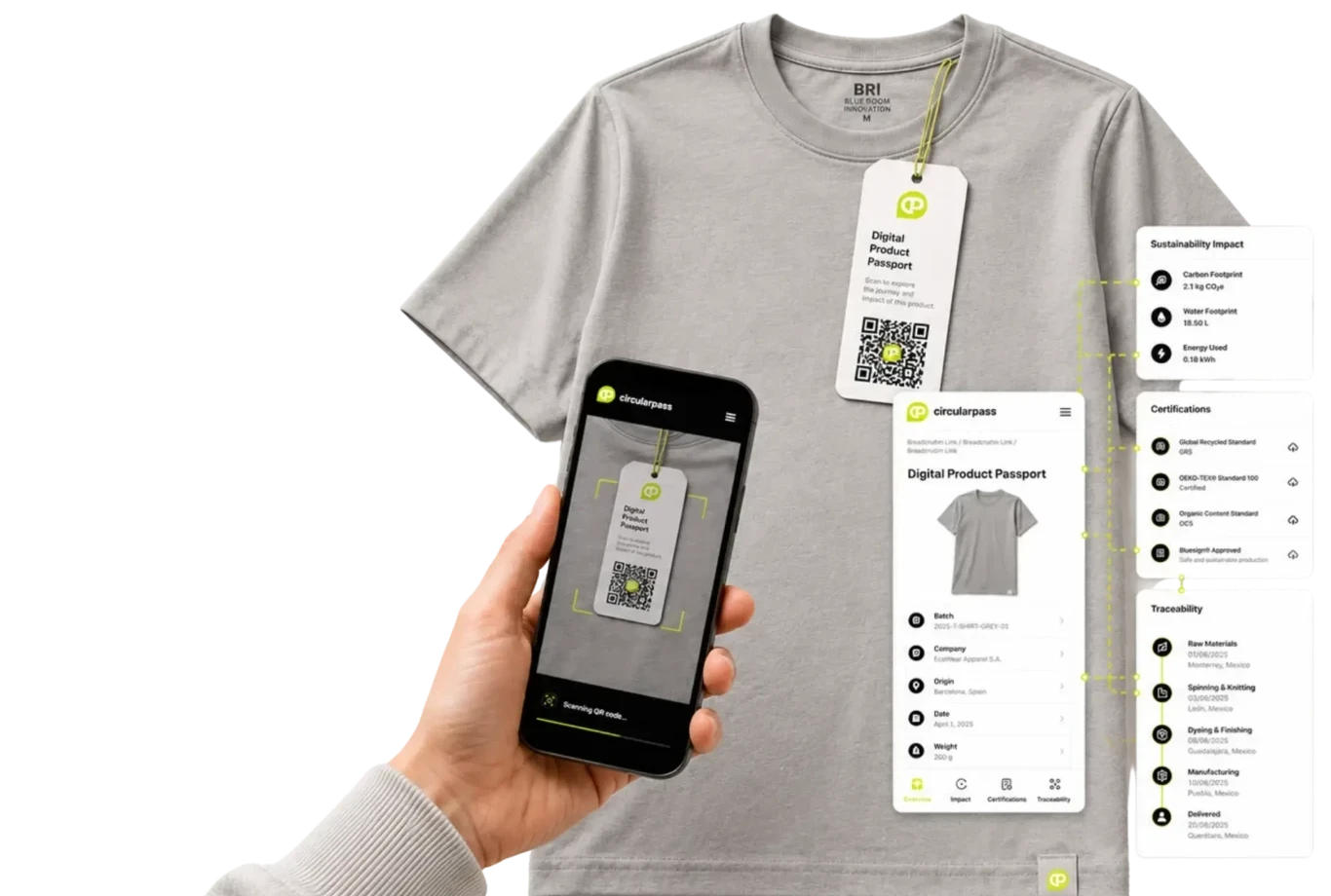
The Digital Product Passport is no longer a distant concept. It is becoming a new way to prove what a product contains, how it is made, where it comes from, and what impact it has. Moreover, it will play a key role in building a more circular, transparent, and traceable economy.
However, many organizations still do not know where to start. They have product data, but it is scattered. They have environmental information, but it is not always useful. They also have suppliers with important data, but those suppliers are not always connected.
This raises an important question: how can a company prepare for the Digital Product Passport without starting a long, expensive, and complex project? The answer is EasyTrack.
EasyTrack helps companies take their first steps toward the Digital Product Passport through a practical, guided, and scalable methodology. It transforms scattered product data into a first functional digital base, without requiring companies to build everything from scratch or change every internal system at once. By identifying, organizing, structuring, and visualizing the data needed for a first functional passport, EasyTrack helps companies understand their starting point and prepare a realistic roadmap.
Its approach is simple: move from scattered product data to a functional Digital Product Passport in four months.
What is EasyTrack?
EasyTrack helps companies prepare for the Digital Product Passport without taking on major initial risks. Its goal is to transform scattered product data into a functional digital passport through a structured, practical, and manageable process.
To do this, EasyTrack combines training, data diagnosis, analysis, prototyping, and expert support. Built on CircularPass, it helps companies understand the Digital Product Passport context, identify what data they already have, detect what information is missing, and create a first functional prototype.
EasyTrack starts from the company’s existing information, such as Excel files, ERP data, supplier documents, internal records, and operational sources. Instead of requiring a complete transformation from day one, it creates a clear foundation that teams can review, share internally, and scale with confidence.
Why was EasyTrack created?
Many companies know that the Digital Product Passport will be important, but few have their data ready. The problem is not usually a complete lack of information, but the fact that this information is fragmented, inconsistent, or difficult to connect.
A company may already have technical sheets, certificates, supplier data, transport information, ESG documentation, and production records. However, this data is often stored in different places and managed by different teams. Some information may be in Excel, other data may be in PDFs, and other documents may be hidden in emails, shared folders, ERP systems, or legacy platforms.
Moreover, companies often do not know which data is up to date or who should maintain it over time. When a client asks for evidence, the team may need to collect information manually from several departments, which creates friction and slows down the response to new regulatory or commercial requirements. It also makes it harder to prove sustainability claims in a solid and consistent way.
EasyTrack was created to solve this intermediate step. Before implementing a complete Digital Product Passport system, the company needs to organize its information, detect gaps, and understand what a first passport would look like using real product data. EasyTrack covers precisely that missing step by turning initial uncertainty into a concrete pilot and a clear roadmap.
The Digital Product Passport does not start with a large platform
Many companies make the same mistake when they approach the Digital Product Passport. They assume that the first step must be a large technology integration, but if the data is not ready, technology alone will not solve the problem.
First, the company must know what information it has, where that information is stored, what is missing, and who will be responsible for maintaining it. Without this foundation, any platform will be limited, because the quality of a Digital Product Passport depends directly on the quality, structure, and reliability of the data behind it.
EasyTrack proposes a more practical approach. It helps the company understand the challenge, analyze the current situation, structure the minimum data needed for a pilot product, and create a functional prototype. This process reduces risk, helps show value in less time, and prevents the project from becoming too broad from the beginning.
In addition, EasyTrack helps involve the right teams from the start. Sustainability, product, operations, quality, purchasing, sales, and IT can work with a shared vision, so the Digital Product Passport stops being an abstract idea and becomes a concrete project with a clear scope. The company does not need to solve every problem in the first phase; it needs to start with a realistic and measurable first step.
What problem does EasyTrack solve?
EasyTrack solves a very common problem: the lack of structure in product data. Many companies already have part of the information needed to move toward the Digital Product Passport, but that information is not ready to use because it may be incomplete, duplicated, outdated, or not properly validated.
This problem becomes even more complex when relevant data depends on suppliers that do not share information in a consistent way. As a result, traceability, ESG reporting, audits, and client relationships can become harder to manage, especially when the company needs to provide evidence quickly.
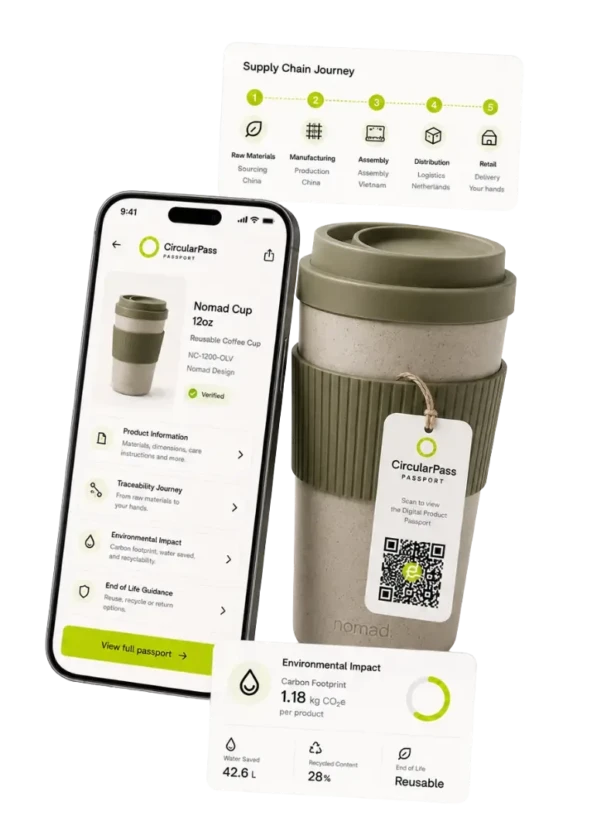
EasyTrack helps organize this situation by identifying available information sources, reviewing data quality, detecting gaps against expected requirements, and transforming that information into a simplified model. This model becomes the basis for creating a functional prototype in CircularPass.
Therefore, the company can visualize its product digitally and understand which data creates value, which information needs improvement, and which responsibilities must be assigned. The result is not only a strategic reflection, but a first operational base for moving toward the DPP.
In addition, EasyTrack helps prevent product data from depending on isolated people or informal processes. Every important data point needs a source, an owner, and an update criterion. In this way, the passport stops being a static document and becomes a living tool for managing product information.
How EasyTrack works
EasyTrack follows a guided and collaborative process that allows companies to move from data identification to the creation of a first functional passport. The methodology includes four main phases: kick-off and initial training, data diagnosis, analysis and simplified model, and prototype creation in CircularPass.
Each phase has a clear goal and reduces part of the uncertainty. This approach enables organized work, helps align teams, and prevents the project from becoming too broad before the company has demonstrated its value.
The official EasyTrack page describes this process as practical and collaborative. Its goal is to guide the company from data identification and analysis to the creation of a functional digital passport, while involving the organization’s key teams.
Phase 1: Kick-Off and initial training
The project starts with a kick-off session to align objectives, methodology, and deliverables. The team also receives an introduction to the Digital Product Passport, the ESPR context, and CircularPass.
Phase 2: Data diagnosis and gap analysis
Next, EasyTrack analyzes the company’s current data situation and identifies what is needed to move toward the Digital Product Passport. This phase helps detect gaps, incomplete information, validation issues, and the departments that should be involved.
Phase 3: Data analysis and simplified model
Phase 4: Prototype creation in CircularPass
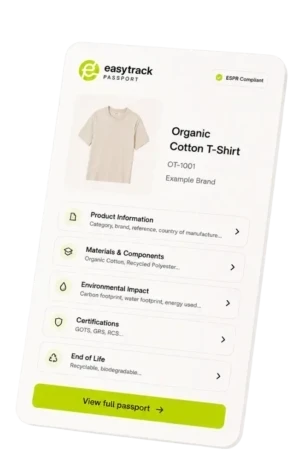
Once the data model is ready, EasyTrack creates and delivers a functional Digital Product Passport prototype in CircularPass. This prototype allows the company to visualize product information, simulate traceability, and understand how the passport would work in practice.
What your company gets with EasyTrack
EasyTrack provides concrete results from the beginning. The company obtains a clear view of its data, an initial structure for its Digital Product Passport, a functional prototype, and a roadmap to keep moving forward.
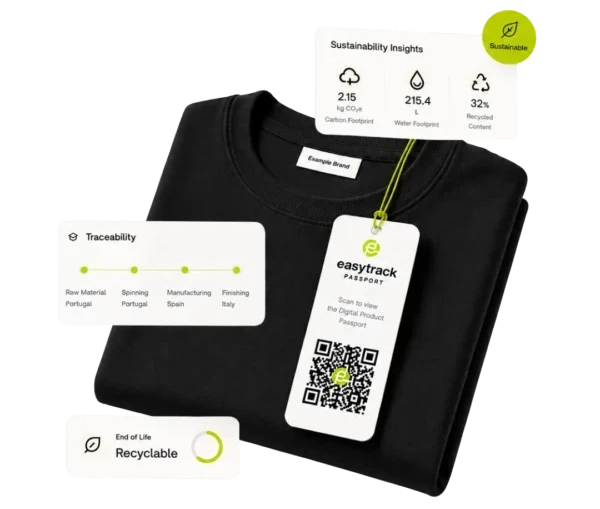
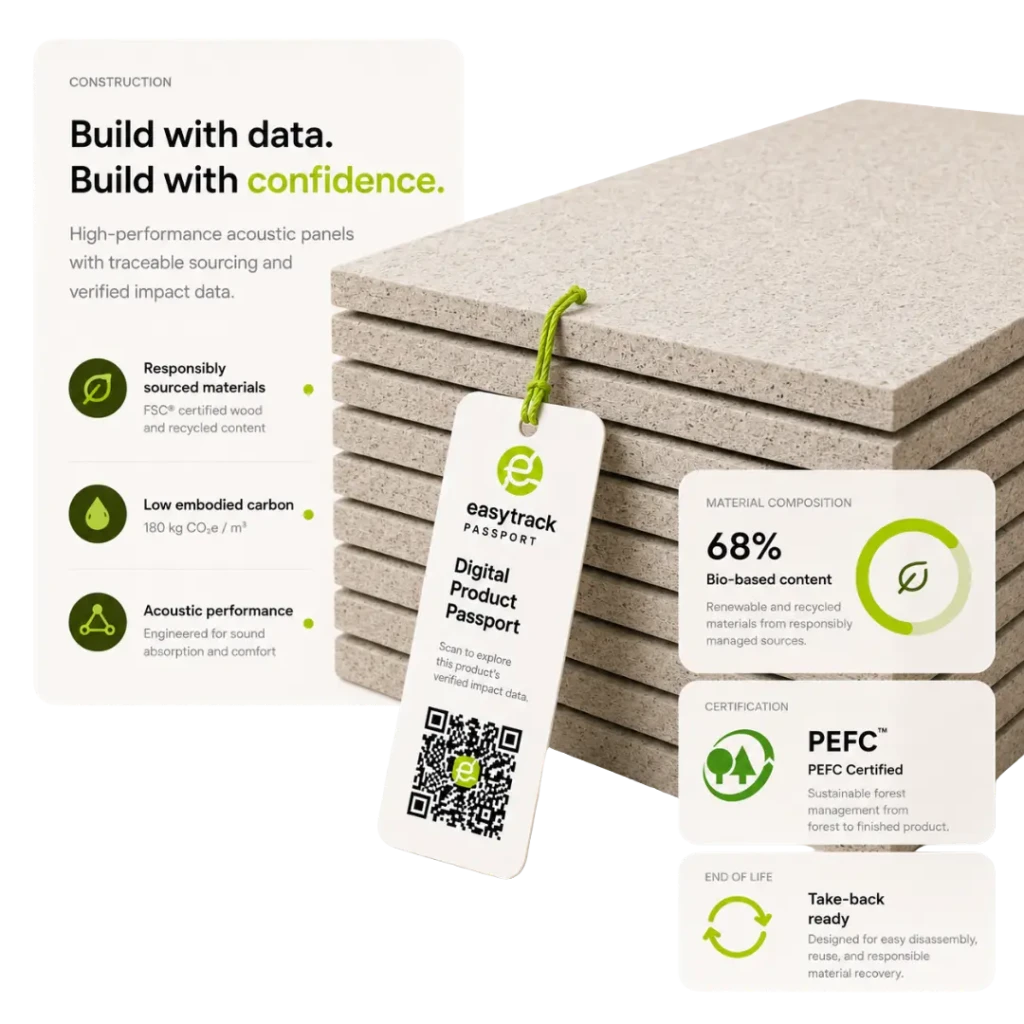
The main results include structured data prepared for sustainability and ESG, a digital product identity through a QR code or unique identifier, initial traceability between processes, materials, and actors, and better organized evidence for audits and clients.
These results help the company stop working with scattered information and start turning product data into a strategic asset. With EasyTrack, the company gains clarity, reduces uncertainty, and understands what steps are needed to scale the DPP with confidence.
Benefits of EasyTrack for your company
EasyTrack offers clear benefits for companies that want to prepare for the new traceability and sustainability landscape. It is not limited to creating a prototype, since it also improves the way the company understands its data, processes, and gaps.
In addition, it helps connect the DPP with business goals. This matters because the Digital Product Passport should not be seen only as compliance, but as an opportunity to create trust, transparency, and competitive advantage.
Regulatory readiness
Helps companies anticipate the DPP and ESPR requirements by organizing their data, detecting gaps, and preparing a clear improvement plan before regulatory pressure increases.
Lower technology barriers
EasyTrack lowers technological barriers by allowing companies to start with existing data and a simple guided pilot, without requiring major integrations or system changes from day one.
Better data quality
EasyTrack improves data quality by identifying sources, reviewing consistency, detecting gaps, and helping companies manage product information more reliably for the DPP and beyond.
More transparency
EasyTrack increases transparency and traceability by turning scattered product information into clear, accessible data that proves origin, composition, processes, impact, and sustainability claims.
Circular economy support
It supports the circular economy by connecting product, material, process, and traceability data, helping companies improve decisions and enable new models around reuse, repair, recycling, and material recovery.
Scalability
It enables scalability by helping companies start with one pilot product, reuse the same structure and methodology, and expand the Digital Product Passport across more products, families, or business lines.
Why EasyTrack is different: it starts from what you already have
EasyTrack is different because it does not propose an oversized solution from the start. It begins with each company’s reality and uses the data that already exists, which makes a major difference for organizations that do not want to delay action until everything is perfect.
Many companies believe they need to solve every issue before starting, but this approach often delays progress. EasyTrack proposes the opposite: first, it identifies what already exists; then, it organizes that information, detects gaps, and creates a first functional version.
It can work with Excel sheets, technical sheets, certificates, supplier documents, process data, transport information, internal systems, ERP data, or ESG documentation. It is not about ignoring limitations, but about turning them into a work plan.
In addition, EasyTrack combines methodology, technology, and expert support. This combination is essential because the Digital Product Passport is not just software or consulting, but a combination of data, processes, technology, and strategy.
From EasyTrack to CircularPass
EasyTrack is the first step toward a more complete implementation. Once the pilot is finished, the company can move toward the full Digital Product Passport service in CircularPass.
This makes it possible to scale from a pilot product to a complete product portfolio. It also allows the company to integrate more data, more actors, and more processes. EasyTrack is not an isolated action, but an entry point.
CircularPass explains that companies can move toward a full Digital Product Passport service, designed to scale from a pilot to an operational system for all products.
The Digital Product Passport is becoming a key step toward a more transparent, traceable, and circular economy. Companies that start preparing now will be better positioned to meet future requirements, respond to market demands, and turn product data into real business value.
With EasyTrack, your company can take that first step in a clear, guided, and measurable way. Instead of starting with a complex transformation, you can begin with the data you already have, identify what is missing, and build a functional Digital Product Passport ready to scale.
Ready to prepare your Digital Product Passport? Discover how EasyTrack can help you turn scattered product data into a functional, scalable passport in just four months.
Related articles
February 2, 2026
Ecodesign Regulation for Sustainable Products (ESPR): what it requires and how to prepare for 2026
An overview of the ESPR Regulation, its requirements, implementation timeline and what companies need to prepare for 2026.

January 20, 2026
The Digital Product Passport in 2026: a key enabler for traceability and sustainability in Europe
What the Digital Product Passport is, why it becomes essential in 2026, and how companies can prepare for Europe’s new traceability standard.
February 11, 2026
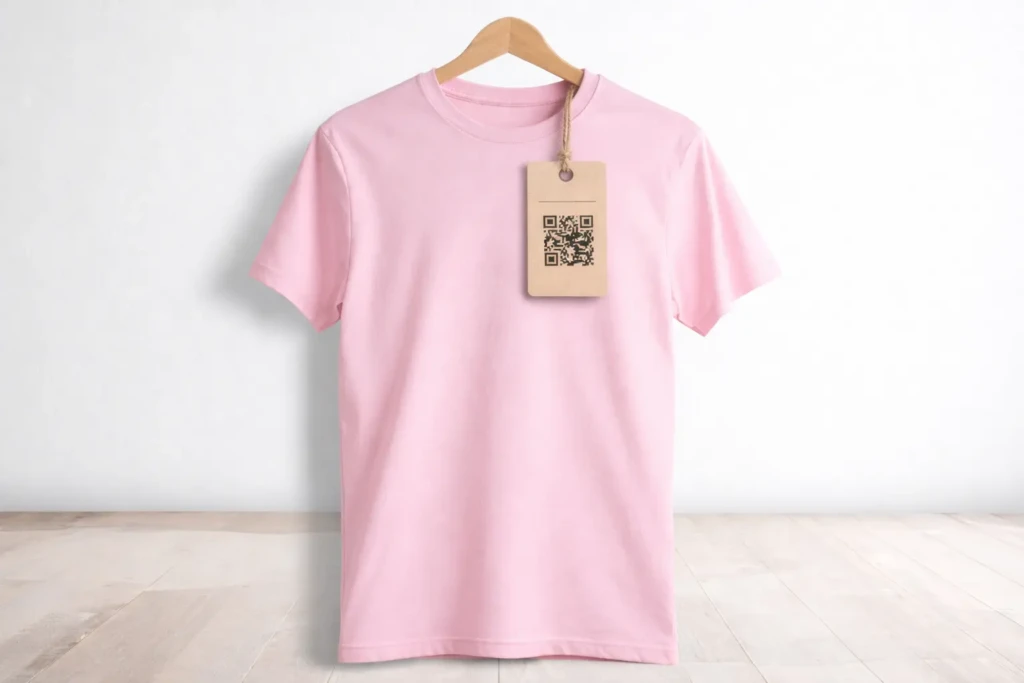
Digital Product Passport for textiles: a revolution in the fashion industry
Discover how the digital product passport for textiles is revolutionizing the fashion industry by providing full traceability, sustainability, and transparency.
Start your journey to supply chain transparency today
Discover Blue Room Innovation, the tech company powering CircularPass, where digital solutions meet environmental impact to build a smarter, more circular future.