
Digital Product Passport Implementation: A Step-by-Step Guide
November 16, 2026
ARTICLE · 5 MIN
Digital Product Passport Implementation: A Step-by-Step Guide
1. Understanding the applicable regulatory requirements
The first step is to establish which regulatory requirements apply to the selected product family when it is placed on the EU market. This assessment should capture the relevant legal instrument, the products covered, the applicable dates and the company’s role, together with a record of who reviewed the interpretation. Questions that depend on measures still under development are best documented separately, so that uncertainties remain visible. The Ecodesign for Sustainable Products Regulation (ESPR) provides the overarching framework, while product-specific measures determine details such as required data, access rights, the data carrier and whether identification takes place at model, batch or item level. Certain product categories are governed by separate legislation. For batteries, the starting point is the applicable provisions of the EU Battery Regulation, supported by the context provided in our battery passport guide.Together, these findings form a scope record explaining why the pilot products are covered and which decisions remain open.2. Mapping product data, ownership and evidence
Once the scope is understood, the requirements can be translated into a structured register of data fields. Each field needs a clear connection to its source system or supporting evidence, the product level it describes, the person responsible for approval, the intended audience and the events that would trigger an update. Model attributes may come from a product information system, batch records from a manufacturing system and material claims from supplier documentation. The important consideration is where the authoritative record actually resides within the business. Missing information also needs a distinct status, and receipt of a document should be distinguished from verification of its contents. A supplier certificate, for example, may have been received without anyone confirming that its scope, validity dates and batch reference support the claim intended for the passport. Including that review in the workflow produces a field register with clear ownership, traceable evidence and visible information gaps.3. Connecting Products to the Correct Passport
Product identification provides the link between a physical product and its digital record. Mapping the identifiers already used for models, variants, batches and individual items helps establish how that link will work at the level required by the relevant rules. Its reliability can then be assessed through practical changes, such as renaming a product, replacing a supplier or updating the company website. Access requires similar attention: the consumer view and any restricted views should be tested using the roles that will actually use them. Within the ESPR framework, interoperability and access rights form part of the passport’s design, while the applicable rules inform decisions about the carrier, its placement and the information available at the point of sale. These considerations are addressed in ESPR, Articles 9–11. The resulting identifier map should therefore be supported by a working scan-to-record process, with access verified for each relevant role.4. Establishing Data Flows and Registration Processes
Reliable passport information also depends on an agreed flow of data from its source. Establishing which system owns each value, and how that value reaches the passport, makes responsibilities clearer as the pilot develops. An approved export may be sufficient at an early stage, particularly when it helps reveal data gaps quickly. Scaling requires a more defined process for validating changes, recording them, retrying failed transfers and reconciling passport information with its source. Responsibilities for missing supplier data and corrections made after a carrier has been printed also need to be established. Registration introduces a separate consideration from hosting: the European Commission’s DPP Registry serves as an index for identifiers and required registration data, while the complete passport data is stored separately. The applicable legal act and the registry implementing regulation determine what must be submitted and when. Our DPP Registry guide explores this registration workstream in more detail. At this stage, the pilot should have a documented data flow, clear ownership, validation controls and an agreed recovery procedure.5. Testing the pilot in realistic scenarioss
A useful pilot is manageable enough to run from beginning to end, while including sufficient variation to expose practical difficulties. Alongside the normal process, testing should cover situations such as a missing document, a change in supplier or composition, and an access request. Recording the person responsible for each test, the product record used, the expected outcome and the actual result creates a clear basis for assessing whether the process works as intended.Example test for a material change
Consider two production batches of the same model that use different suppliers. Where batch-level identification is appropriate for the pilot, scanning each batch should lead to the evidence that belongs to it. Updating the newer batch then provides an opportunity to check whether an approved correction appears in the appropriate view while preserving the older batch’s connection to its original supplier evidence. Independent review adds another useful check: a reviewer should be able to open and assess the supporting evidence without relying on the person who uploaded it. The test log can then demonstrate that the product record, its evidence and the relevant access view are independently verifiable.6. Assessing whether the pilot is ready
Clear acceptance criteria give the team a shared basis for deciding whether the pilot is ready to progress. The checks below offer practical starting points and can be adapted to the products involved, the applicable rules and the organisation’s approved data controls.- Coverage: every applicable field has an owner and either verified supporting evidence or a clearly assigned outstanding issue.
- Identification: scans lead to the correct model, batch or item across the test sample, including after a correction.
- Access: each role can view the information it is entitled to access, with restricted fields appropriately protected.
- Operations: the team can restore availability, trace changes and hand over responsibilities.
- Registration: where required, the responsible operator has tested the applicable registration process and documented the result.
7. Expanding to additional product families
The results provide a basis for a joint review by product, operations, IT and compliance teams. Expansion can then proceed through product families that share the same data sources and controls. Where a new family introduces different materials, suppliers or legal requirements, its scope and supporting evidence need to be reassessed. A documented rollout decision brings these findings together, with agreed ownership of unresolved issues and a date for review.Getting started with CircularPass
For organisations considering their first pilot, a useful starting point is one product family, a sample of its data and an example of supplier evidence. These materials provide a practical basis for discussing how the information could be organised within a passport and how the pilot could reflect the company’s products and operational needs. The CircularPass team can help explore that starting point through its CircularPass’s Digital Product Passport solution and the assessment approach offered by EasyTrack .Related articles

PPWR Regulation: what it is, key requirements and how it affects businesses
Learn what the PPWR Regulation requires, when it applies, which companies are affected and how to prepare packaging data for compliance.
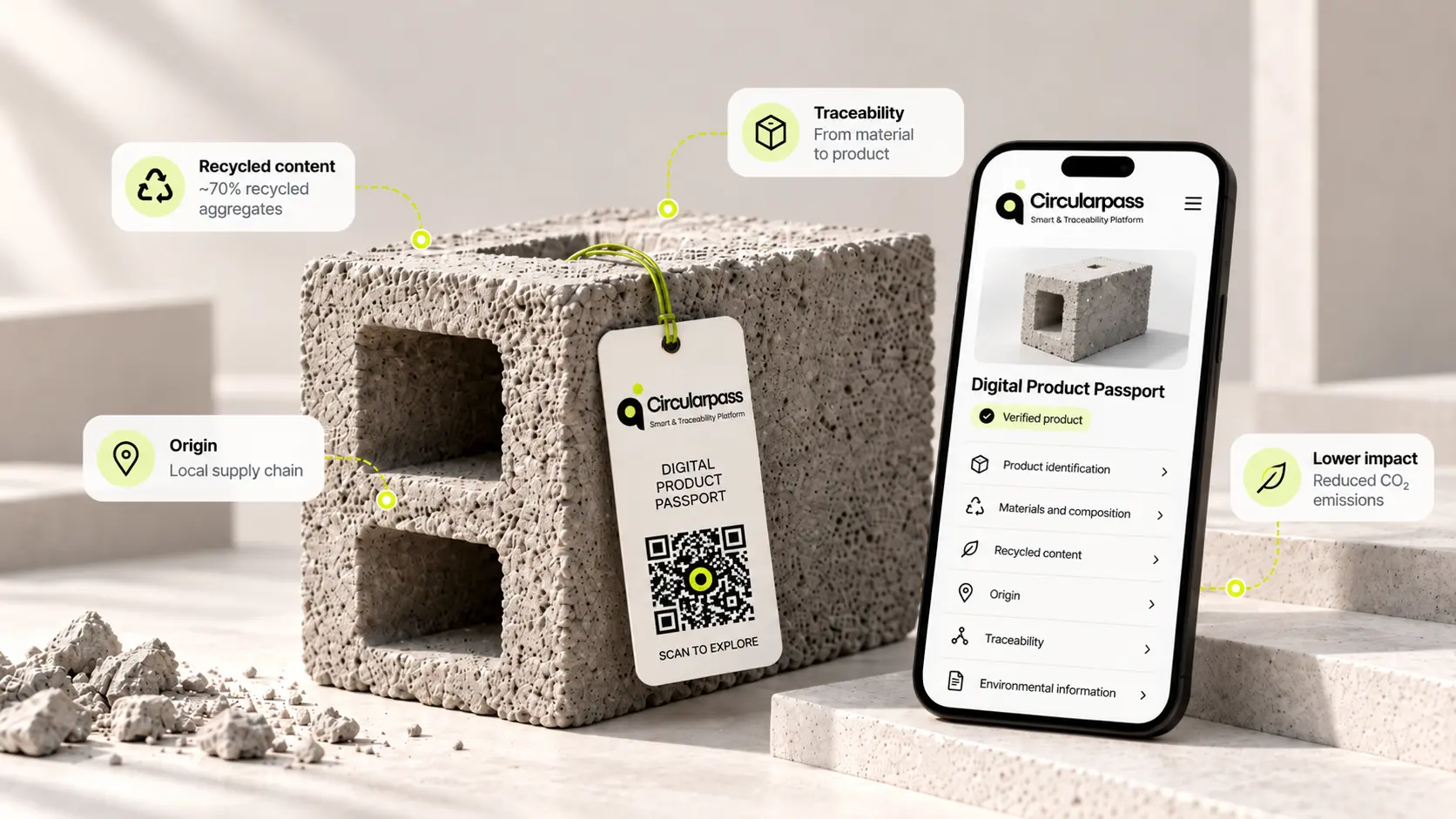
Digital Product Passport example: what a DPP looks like and how it works
See what a Digital Product Passport looks like in practice, what information it can contain, and how companies can prepare and implement their first DPP.

Digital Battery Passport under the EU Battery Regulation: requirements and how to prepare for 2027
Learn what the digital battery passport is, what the EU Battery Regulation requires, and how companies should prepare for 2027.
Join our sustainable
community
Join our sustainable community
Developed by Blue Room Innovation - blueroominnovation.com
CONTACT US:
Blue Room Innovation, SL
Email: info@blueroominnovation.com
Adress: Carrer de Santa Eugènia, 7 local, 17001 Girona