
Digital Product Passport Requirements: ESPR Data and EN Standards
November 17, 2026
Digital Product Passport requirements cover both the information a passport must carry and the way the system identifies, shares and maintains it. Under the ESPR, the applicable product rules determine what a particular passport must contain and when it is required. European EN standards help teams assess the technical design.
Which Digital Product Passport requirements apply?
Start with the product and the legal instrument that covers it. Under Regulation (EU) 2024/1781, the Ecodesign for Sustainable Products Regulation (ESPR), Article 9 and the applicable delegated act govern when a passport must accompany a product. The act specifies the product scope, required information, passport level, carrier and access rights. Check its application date and transitional provisions.
Some passports have a separate legal basis. For example, the EU Battery Regulation defines the battery passport for covered battery categories. Use the battery passport guide to see how a sector-specific regime differs from the general ESPR framework.
What information goes into a Digital Product Passport?
Annex III of the ESPR provides categories from which the delegated act specifies what goes into a passport. These can include the unique product identifier, relevant operator and facility identifiers, commodity codes, conformity documentation, instructions or safety information and the reference of the backup provider. Product characteristics and environmental information depend on the applicable requirements. Check each field against the actual act before treating it as mandatory. ESPR, Articles 7 and 9 and Annex III.
Record the entity and access level for each field
A model identifier can point to specifications shared across a product range. A batch identifier can distinguish production lots with different evidence. An item identifier can distinguish units. Record the level the applicable act requires and tie each value to the record it describes. Specify who can read or update it and how the owner will keep it accurate, complete and current.
For example, an operator might publish care instructions while restricting supplier evidence to authorised users, where the rules allow. If a material value changes at batch level, its evidence should follow the affected batch. This is an illustration of data design. The applicable act determines the actual fields and rights.
What must the passport system support?
Articles 10 and 11 set technical and operational requirements for ESPR passports. A data carrier links to a persistent unique product identifier. Passport data must use open standards and interoperable formats, with details such as machine readability and searchability applied as appropriate. Access follows the rights specified for the product group. The passport must remain available for the period required by the applicable act. Article 10 also provides for a backup copy through a digital product passport service provider. ESPR, Articles 10–12.
When evaluating a platform, ask for a demonstration of a scan, a data export and an access check. Verify that the identifier resolves to the correct product, an independent system can read the exported data, and each role sees the information it is entitled to access. Check how the organisation would preserve the passport if it moved to another provider.
Which EN standards support ESPR conformity?
Commission Implementing Decision (EU) 2026/1736 lists six harmonised standards in support of the ESPR. Under Article 41(2), conformity with a cited standard gives a presumption of conformity for the requirements of Articles 10 and 11 that it covers. For supplier review, ask which edition and provisions the system implements and what evidence supports that statement.
- EN 18216:2026 covers protocols for exchanging passport data.
- EN 18219:2026 covers unique identifiers.
- EN 18220:2026 covers data carriers.
- EN 18221:2026 covers storage, archiving and persistence.
- EN 18222:2026 covers APIs for passport lifecycle management and search.
- EN 18223:2026 covers interoperability between systems.
Two further EN standards address access rights, information security and confidentiality (EN 18239:2026), and data authentication, reliability and integrity (EN 18246:2026). Both appear in Spain’s November 2026 list of ratified European standards. They are outside the six references in Decision 2026/1736. Check the Commission’s current list of Official Journal references before relying on a presumption of conformity.
What goes into the EU DPP Registry?
The EU Digital Product Passport Registry indexes identifiers and the registration data specified by the relevant legislation. The full passport remains stored separately. Check the applicable product rules and Implementing Regulation (EU) 2026/1778 to establish who submits the registration, what they provide and when. Our DPP Registry guide explains the registration workstream in more detail.
What evidence should you ask a DPP provider for?
Use this matrix in a procurement or design review. The checks are examples. Add the exact legal provision and edition of the cited standard where applicable.
| Area | Evidence to request |
|---|---|
| Scope and data | A field map with the legal source, product level, evidence, owner and permitted audience. |
| Identification and carrier | A scan demo showing the intended model, batch or item and an identifier that survives a change of hosting. |
| Interoperability | An export and a documented interface that an independent system can read and interpret. |
| Access and integrity | Tests for public and restricted roles, plus a record of how an approved correction is made and traced. |
| Continuity and registration | Evidence of recovery from backup, plus records of applicable registry submissions and returned identifiers. |
Use the evidence to resolve gaps before relying on the passport in production. For the sequence from initial scope to a rollout decision, keep the implementation workstream separate from this review of requirements.
Review your DPP requirements with CircularPass
Bring a product family, its applicable requirements and a sample of the data you already have. CircularPass can help you assess how to structure that information and turn it into a Digital Product Passport for your use case. Explore CircularPass’s Digital Product Passport solution.
Related articles

PPWR Regulation: what it is, key requirements and how it affects businesses
Learn what the PPWR Regulation requires, when it applies, which companies are affected and how to prepare packaging data for compliance.
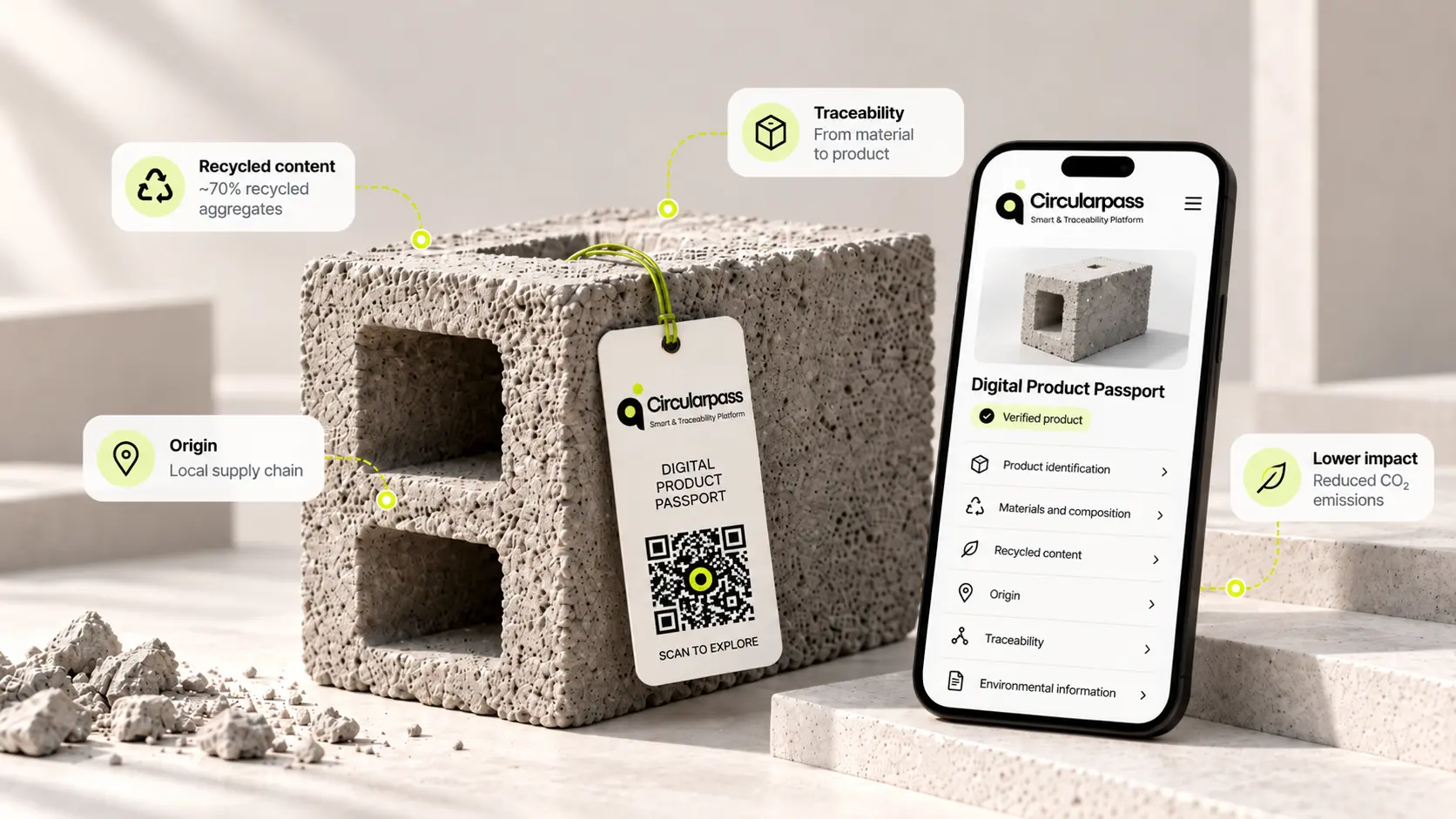
Digital Product Passport example: what a DPP looks like and how it works
See what a Digital Product Passport looks like in practice, what information it can contain, and how companies can prepare and implement their first DPP.

Digital Battery Passport under the EU Battery Regulation: requirements and how to prepare for 2027
Learn what the digital battery passport is, what the EU Battery Regulation requires, and how companies should prepare for 2027.
Join our sustainable
community
Join our sustainable community
Developed by Blue Room Innovation - blueroominnovation.com
CONTACT US:
Blue Room Innovation, SL
Email: info@blueroominnovation.com
Adress: Carrer de Santa Eugènia, 7 local, 17001 Girona