
ARTICLE | 12 Minuts
Passaport de Materials: la clau d'un sector de la construcció més traçable i circular
EasyTrack: prepara el teu Passaport Digital de Producte sense començar de zero
4 de juny, 2026
En aquest article
El sector de la construcció està vivint una transformació important. La sostenibilitat ja no es limita a millorar l'eficiència energètica dels edificis o a utilitzar materials amb menor impacte ambiental. Cada cop és més important demostrar, amb dades fiables, quins materials s'utilitzen, d'on provenen, quina és la seva prestació, quin impacte generen i quines possibilitats ofereixen al final del seu cicle de vida.
Aquest canvi no només està impulsat per les tendències del mercat. La regulació europea s'està movent cap a un model en què els productes de construcció han d'anar acompanyats d'informació digital, estructurada, accessible i verificable. Un exemple clar és Reglament (UE) 2024/3110, el nou reglament europeu de productes de construcció, que estableix normes harmonitzades per a la comercialització d'aquests productes i substitueix progressivament el Reglament (UE) núm. 305/2011 anterior.
Aquest reglament, també conegut com el Reglament de productes de la construcció o Reglament CPR, promou un sector de la construcció més digital, transparent i alineat amb els objectius europeus de sostenibilitat. Un dels seus principals desenvolupaments és la introducció de la Passaport de producte digital per a productes de construcció, un sistema dissenyat per facilitar l'accés a informació tècnica, mediambiental i de compliment relacionada amb els productes.
El reglament va entrar en vigor el 7 de gener de 2025, i la majoria de les seves disposicions s'aplicaran a partir de 8 de gener de 2026, tot i que la seva implementació serà gradual i dependrà, en part, de noves normes harmonitzades i de requisits específics per família de producte.
En aquest context, el passaport de materials es converteix en una eina estratègica per a fabricants, empreses de construcció, promotores i gestors de residus. Encara que la regulació se centra principalment en el Passaport Digital de Producte, moltes de les dades requerides per complir aquest nou marc depenen directament de la informació dels materials: composició, origen, contingut reciclat, impacte ambiental, traçabilitat, reciclabilitat i documentació tècnica.
És per això que el passaport de materials no s'ha d'entendre com un document més. És una base digital que fa possible organitzar informació de materials, millorar la traçabilitat i preparar les empreses per a un mercat on les dades seran tan importants com el producte físic mateix.
Què és un passaport de material?
A passaport de materials és un registre digital que recull, organitza i manté informació rellevant sobre els materials utilitzats en un producte, edifici, infraestructura o procés de construcció. El seu propòsit és crear una identitat digital per als materials perquè puguin ser identificats, rastrejats, avaluats i gestionats durant tot el seu cicle de vida.
A diferència d'una fitxa tècnica tradicional, un passaport de materials no es limita a descriure les característiques d'un producte en el moment de la venda. La seva funció és més àmplia: connecta informació sobre l'origen, la composició, el rendiment tècnic, l'impacte ambiental, les certificacions, el manteniment, la reutilització, la reciclabilitat i la gestió del final de vida útil.
Dit això, un passaport de materials ajuda a respondre preguntes com: quins materials formen part d'un producte, d'on provenen, quina és la seva composició, si inclouen contingut reciclat, quin impacte ambiental generen, si es poden reutilitzar o reciclar, i quina documentació tècnica o ambiental els dona suport.
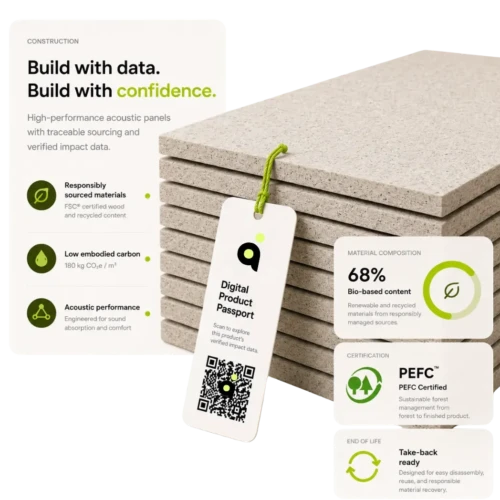
Aquesta informació és especialment important en la construcció, on els materials romanen integrats en edificis i infraestructures durant dècades. Un edifici pot contenir acer, formigó, fusta, vidre, alumini, aïllament, terres, panells, cables, revestiments i molts components tècnics. Sense una traçabilitat adequada, gran part d'aquesta informació es perd amb el temps.
Quan un edifici es reforma, es renova o es desmantella, molts materials es tracten com a residus de baix valor simplement perquè la seva composició, origen o estat no es coneix amb precisió. No obstant això, si aquests materials tenen un passaport digital, poden conservar la seva identitat i convertir-se en recursos valuosos per a nous cicles de producció.
El passaport de materials permet la transició d'una lògica lineal cap a una de circular. En lloc de fabricar, utilitzar i descartar, permet identificar, mantenir, recuperar i valorar els materials. Aquesta diferència és essencial per construir una economia més eficient en l'ús dels recursos.
També és important entendre que un passaport de materials no ha de ser igual per a cada empresa. El seu contingut pot variar segons el tipus de producte, el nivell de detall requerit, el sector, la cadena de subministrament i els objectius de l'empresa. No obstant això, el seu propòsit és sempre el mateix: convertir la informació material en dades útils, traçables i accionables.
Per què el passaport de materials és clau per a la construcció
El sector de la construcció concentra una gran quantitat de materials que, un cop instal·lats, poden romandre en edificis i infraestructures durant dècades. No obstant això, la informació associada a aquests materials no sempre es conserva amb el mateix nivell de precisió. Les dades sobre composició, origen, certificacions, impacte ambiental o potencial de recuperació sovint es troben disperses en diferents documents, empreses i fases del projecte.
Aquesta manca de continuïtat genera un problema important: quan un material perd la seva informació, també perd part del seu valor. Es fa més difícil provar la seva qualitat, justificar el seu compliment, planificar el seu manteniment o recuperar-lo adequadament al final del seu cicle de vida.
El passaport de materials aborda aquest desafiament creant una identitat digital per a cada material o producte de construcció. D'aquesta manera, la informació ja no es limita a una fitxa tècnica o a un certificat aïllat, sinó que pot acompanyar el material durant tot el seu recorregut: des de la fabricació fins a la instal·lació, l'ús, la rehabilitació, el desmuntatge o el reciclatge.
A la pràctica, això permet prendre millors decisions en cada etapa d'un projecte. Durant el disseny, ajuda a seleccionar materials amb dades més completes sobre el rendiment, l'impacte ambiental, el contingut reciclat o el potencial d'circularitat. Durant la construcció, facilita la traçabilitat dels productes instal·lats i millora el control documental. Durant la fase d'ús de l'edifici, pot donar suport a les tasques de manteniment, substitució o rehabilitació. I al final de la seva vida útil, ajuda a identificar quins materials es poden reutilitzar, reciclar o recuperar amb majors garanties.
El passaport de materials també respon a una necessitat cada cop més important per a les empreses del sector: demostrar afirmacions amb dades. En un mercat on els requisits normatius, els criteris ESG i les exigències dels clients i les administracions públiques van en augment, disposar d'informació estructurada sobre els materials pot esdevenir un avantatge competitiu.
Per aquesta raó, la seva importància va més enllà de la sostenibilitat. El passaport de materials ajuda a reduir la pèrdua d'informació, millorar la traçabilitat, facilitar el compliment normatiu i preparar el sector per a un model de construcció més circular, digital i eficient.
Quina informació inclou un passaport de materials?
A passaport de materials pot incloure diferents nivells d'informació depenent del seu ús previst. No obstant això, per ser realment útil, hauria d'incloure dades tècniques, mediambientals, circulars i documentals.
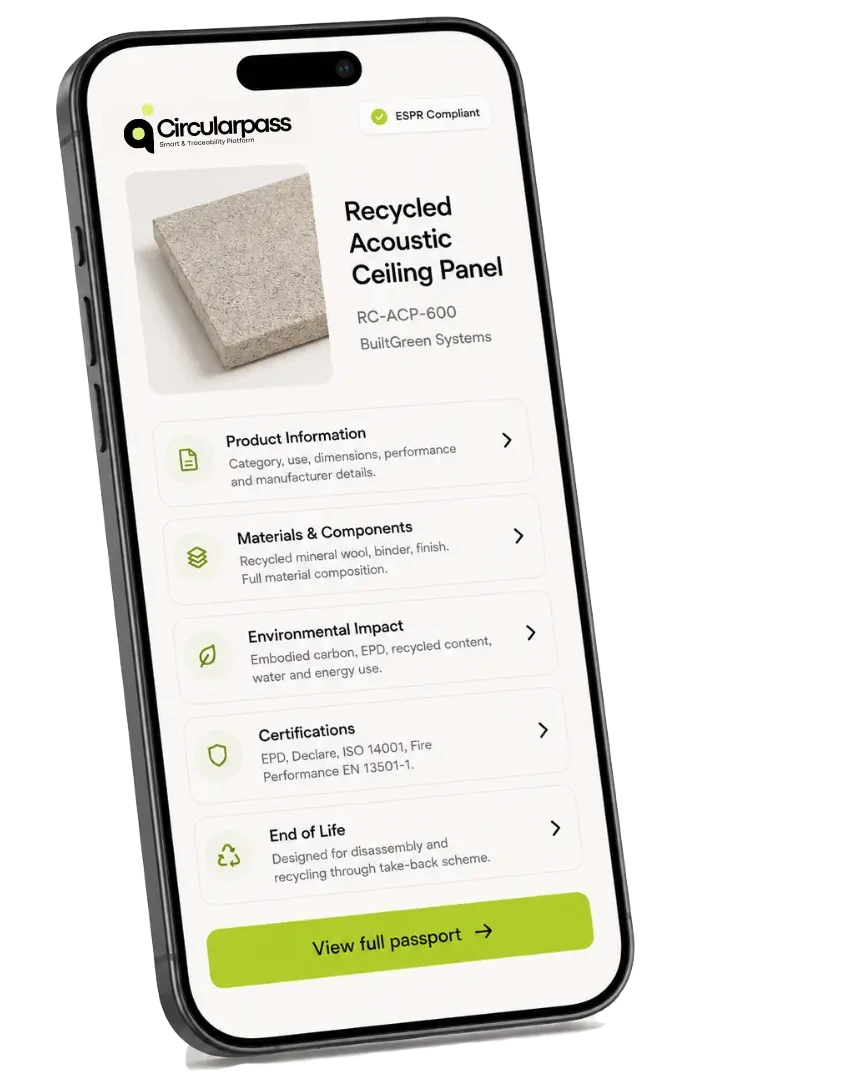
- Identificació de Materials: Dades bàsiques que vinculen el material físic amb el seu registre digital (nom, fabricant, proveïdor, lot, data de producció, codi de referència, ubicació, família de productes, identificador únic).
- Composició: Detalls dels components del material, com ara matèries primeres, percentatges, contingut reciclat, additius, tractaments o recobriments, útils per avaluar la seva reciclabilitat, seguretat i compatibilitat.
- Rendiment tècnic: Propietats i proves relacionades amb la resistència, durabilitat, seguretat, aïllament tèrmic/acústic, estabilitat i rendiment mecànic, incloent condicions d'ús i instruccions d'instal·lació.
- Informació mediambiental: Indicadors com la petjada de carboni, el consum d'energia i aigua, les emissions associades, les avaluacions del cicle de vida, les declaracions ambientals i les certificacions.
- Informació circularConsideracions sobre el final de la vida útil, incloent-hi el potencial de reutilització, la reciclabilitat, les instruccions de desmuntatge, les opcions de reparació, la valorització o la devolució al fabricant.
- Documentació de compliment normatiuCertificacions, marcatge CE, declaracions de conformitat, manuals, garanties i qualsevol prova que demostri el compliment normatiu.
- Història material: Registre d'esdeveniments durant el seu cicle de vida: fabricació, transport, lliurament, instal·lació, manteniment, reparació, desmuntatge, reutilització o reciclatge.
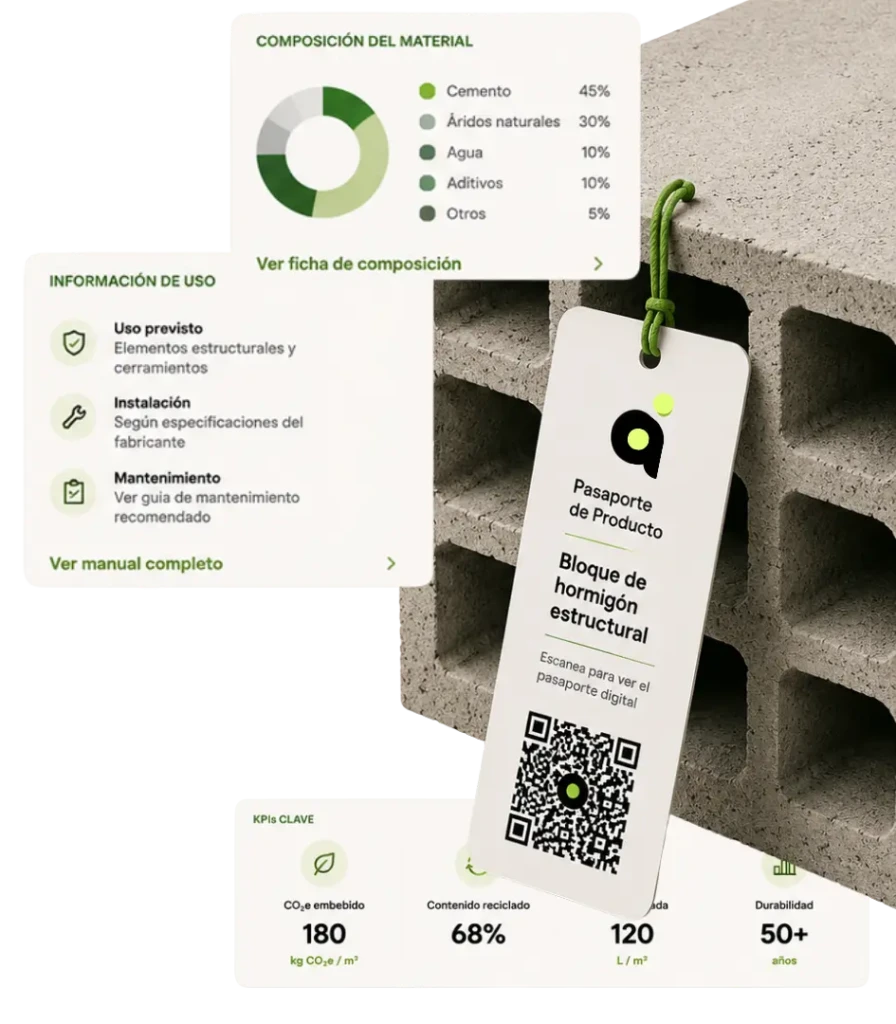
Aquest darrer punt és especialment important. Un passaport de materials no hauria de ser una instantània estàtica del producte, sinó un registre viu. El seu valor augmenta quan es pot actualitzar i acompanyar el material al llarg de tot el seu cicle de vida.
La clau és que les dades siguin estructurades, verificables i interoperables. No es tracta simplement d'accedir a documents en una plataforma, sinó de convertir la informació en un actiu digital que es pugui consultar, compartir i utilitzar per prendre decisions.
Beneficis per a fabricants, empreses constructores i gestors de residus
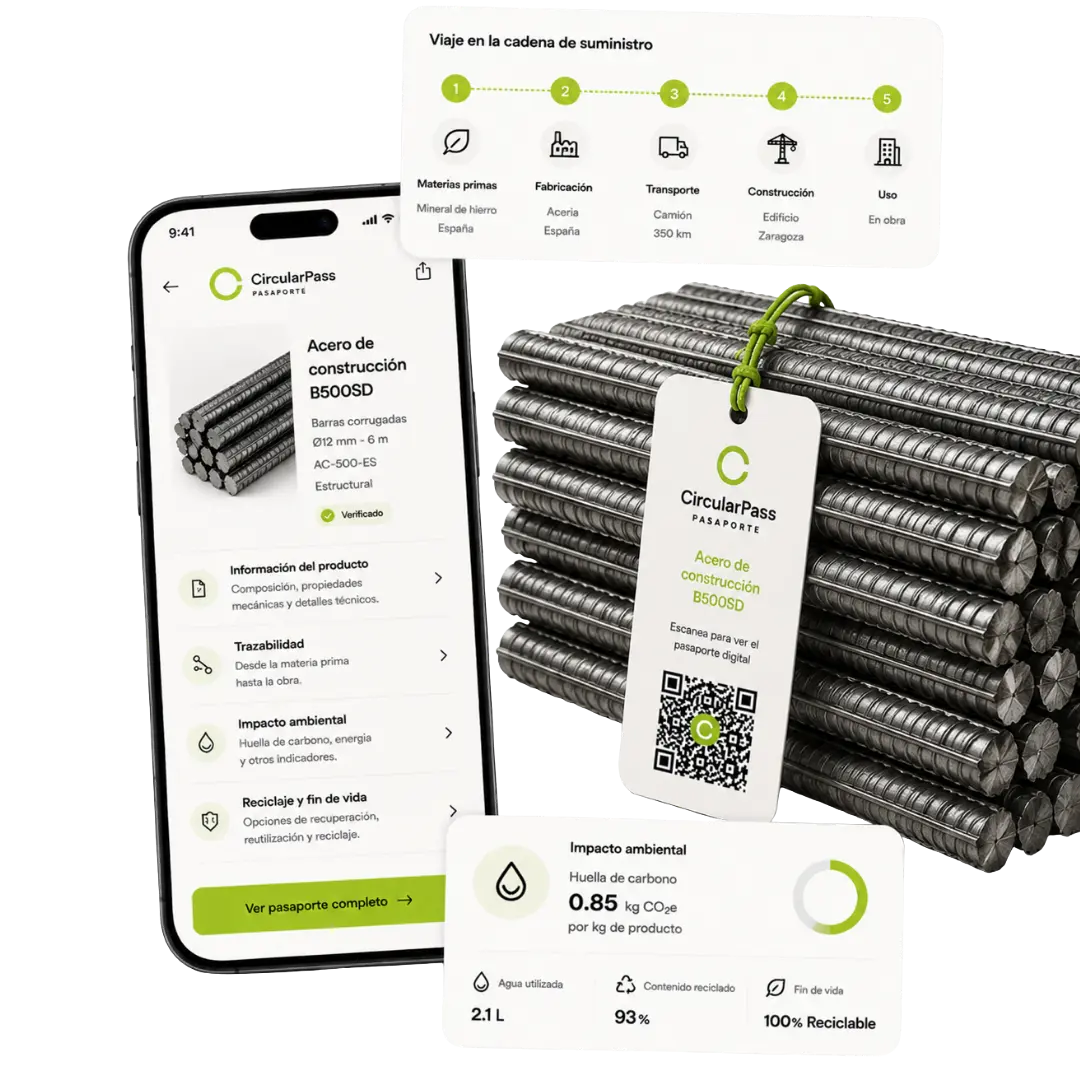
El passaport de materials aporta valor a tota la cadena de valor de la construcció, des de la fabricació fins a la gestió del final de la vida útil. La seva informació ajuda a millorar els processos, garantir el compliment i crear valor en cada etapa del projecte.
Per fabricants, els permet demostrar la sostenibilitat i la qualitat dels seus productes amb dades verificables, diferenciar-se dels competidors, facilitar auditories, respondre millor a licitacions i millorar la gestió interna de la cadena de subministrament.
Per empreses constructores, centralitza la informació in situ, millora el control de documents, redueix el temps administratiu i millora la traçabilitat i el compliment dels requisits mediambientals i de certificació.
Per desenvolupadors, proporciona transparència i dóna suport al manteniment, a futures renovacions i a auditories. Per arquitectes i empreses d'enginyeria, permet prendre decisions basades en dades pel que fa al cost, el rendiment tècnic, l'impacte ambiental i la circularitat dels materials.
Per gestors de residus i recicladors, millora la separació, classificació i valorització dels materials, millorant la qualitat del reciclatge i generant matèries primeres secundàries de més valor.
En general, el passaport de materials va més enllà del compliment normatiu, augmentar l'eficiència, reduir els riscos, millorar la transparència i obrir noves oportunitats de negoci.
Com començar a implementar un passaport de materials amb EasyTrack
Implementació d'una passaport de materials no ha de començar amb un projecte complex o una integració tecnològica important. Per a moltes empreses, el primer pas és organitzar la informació que ja tenen sobre els seus productes i materials, identificar les dades que falten i crear una primera versió funcional del passaport.
EasyTrack, la solució CircularPass, està dissenyada precisament per a aquest punt de partida. Permet a les empreses iniciar el seu camí cap a la passaport de materials de manera guiada, pràctica i escalable.
A través d'EasyTrack, una empresa pot seleccionar un producte, una família de materials o una línia específica i convertir la seva informació existent en una primera estructura digital. Això fa possible visualitzar com funcionaria el passaport, quines dades es necessiten i quines millores s'han de fer per avançar cap a una traçabilitat més completa.
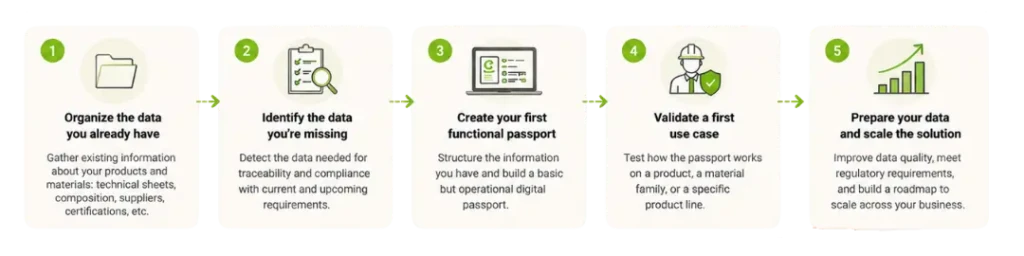
El valor d'EasyTrack rau en el fet que les empreses poden començar sense haver de digitalitzar tot el seu catàleg des del primer dia. Poden validar un primer cas d'ús, preparar les seves dades per a futures exigències normatives i construir un full de ruta clar per escalar la solució.
D'aquesta manera, el passaport de materials deixa de ser una idea abstracta i es converteix en un primer projecte concret, manejable i orientat a resultats.
Aplicacions pràctiques del passaport de materials
El passaport de materials esdevé valuós quan passa de ser un registre digital a una eina operativa. La seva utilitat és especialment clara quan la informació es pot compartir entre diferents actors de la cadena de valor de manera segura, interoperable i traçable.
A Blue Room Innovation, hem treballat en projectes que demostren com els passaports digitals es poden aplicar en contextos reals del sector de la construcció, connectant materials, productes, residus i espais de dades. Aquesta experiència ens permet entendre el passaport de materials no només com una eina de documentació, sinó com una infraestructura digital per impulsar l'economia circular.
Un exemple és la nostra participació a RETECH, on on vam desenvolupar un connector de dades per enllaçar passaports digitals associats a residus a un espai de dades federat. L'objectiu era facilitar la traçabilitat circular dels materials i residus generats a les obres, permetent compartir informació entre els diferents actors de l'ecosistema de manera controlada i interoperable.
Aquest plantejament permet registrar informació rellevant dels residus de construcció, com ara el seu origen, composició, traçabilitat, impacte ambiental o potencial de valorització. D'aquesta manera, els residus deixen de gestionar-se com un flux opac i es tracten com un recurs amb informació associada. Això dóna suport a decisions més sostenibles, com ara prioritzar la reutilització, millorar la classificació, optimitzar el reciclatge o calcular indicadors ambientals com la petjada de carboni.
Un altre cas rellevant és Nes Digital, una iniciativa en la qual vam treballar al costat de Fundació i2CAT i Grup Celsa per connectar CircularPass amb els espais de dades europeus. En aquest projecte, vam validar com els passaports digitals poden intercanviar informació entre organitzacions de manera segura, estandarditzada i interoperable.
Aquesta connexió és essencial per al futur de la construcció. Un fabricant, una empresa constructora, un gestor de residus o una administració pública poden necessitar accés a informació sobre el mateix material, però no tots els actors han de veure les mateixes dades ni tenir el mateix nivell de permisos. Els espais de dades fan possible compartir informació mantenint la sobirania de cada actor sobre les seves pròpies dades, permetent la col·laboració sense comprometre informació sensible.
La nostra experiència en aquests projectes demostra que el passaport de materials no és només una eina de documentació o una resposta a obligacions normatives. És una infraestructura digital que connecta materials, productes, residus i organitzacions dins del mateix ecosistema d'informació.
Quan els passaports digitals s'integren amb connectors interoperables i espais de dades, la traçabilitat ja no depèn de documents aïllats; passa a formar part d'una xarxa d'informació verificable. Això obre la porta a models d'economia circular més sòlids, on els materials es poden mantenir identificats, recuperar valor i reintroduir-se en nous cicles de producció amb més confiança.
Finalment, les aplicacions pràctiques de la passaport de materials que el seu veritable potencial rau en connectar dades, actors i decisions. A Blue Room Innovation treballem per fer aquesta traçabilitat aplicable en entorns reals, ajudant les empreses a complir millor, col·laborar millor i avançar cap a una construcció més circular.
Articles relacionats
2 de febrer de 2026
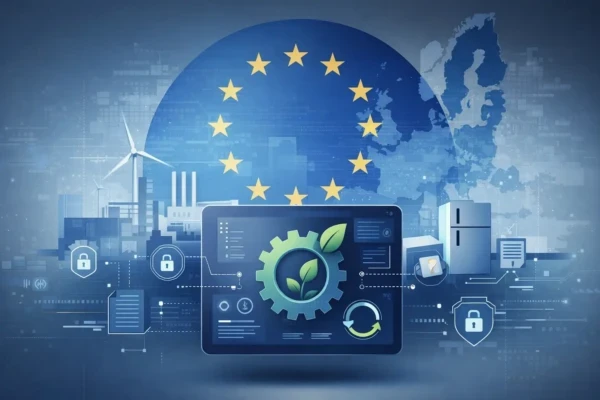
Reglament d'ecodisseny per a productes sostenibles (ESPR): què requereix i com preparar-se per al 2026
Una visió general del Reglament ESPR, els seus requisits, el calendari d'implementació i el que les empreses han de preparar per al 2026.
20 de gener de 2026
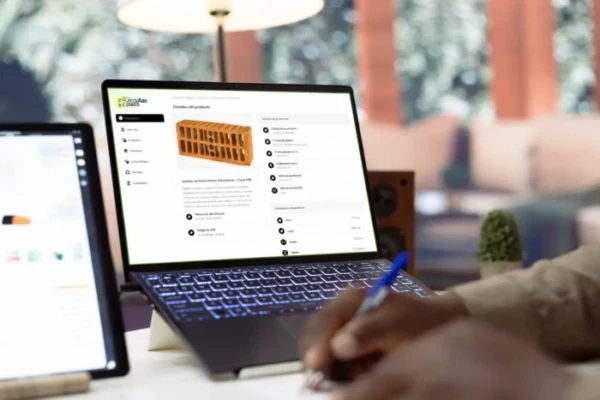
El Passaport Digital de Producte al 2026: un factor clau per a la traçabilitat i la sostenibilitat a Europa
Què és el Passaport Digital de Producte, per què esdevé essencial el 2026 i com les empreses es poden preparar per al nou estàndard de traçabilitat d'Europa.
11 de febrer de 2026
Passaport de producte digital per a tèxtils: una revolució en la indústria de la moda
Descobreix com el passaport digital de producte per a tèxtils està revolucionant la indústria de la moda proporcionant traçabilitat, sostenibilitat i transparència totals.
Comença avui mateix el teu viatge cap a la transparència de la cadena de subministrament
Descobreix Blue Room Innovation, l'empresa tecnològica que impulsa CircularPass, on les solucions digitals es combinen amb l'impacte ambiental per construir un futur més intel·ligent i circular.