
Digital Product Passport for Textiles: Regulatory Analysis Report
November 3, 2026
LIFE DPP-TEX | ARTICLE | 8 Min
Digital Product Passport for Textiles: Regulatory Analysis Report
November 3, 2026
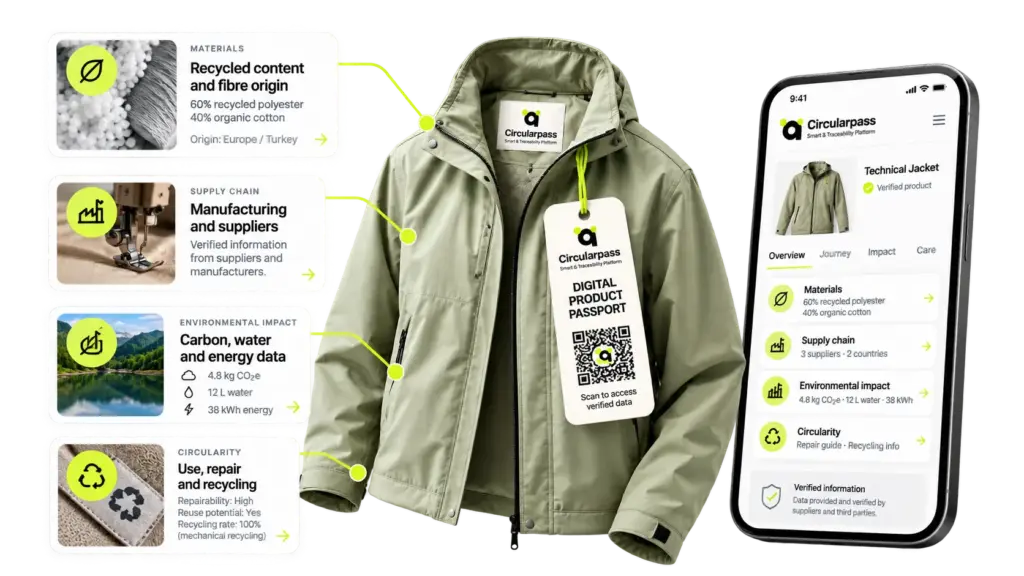
Why LIFE DPP-TEX produced this regulatory report
LIFE DPP-TEX brings together partners from Spain, Bulgaria and the Netherlands over 30 months, from July 2026 to December 2028. Co-funded by the European Union’s LIFE Programme, the project will adapt CircularPass to textile value chains and test the approach through complementary pilots for home-textile recycling in Bulgaria and circular pathways for workwear in Spain. These activities are intended to demonstrate and validate the solution. [1] [7] Developing that solution requires a common understanding of the rules that affect product information, traceability and circular operations. D2.1 provides the initial regulatory baseline for those decisions. Its purpose is to inform the project’s data architecture, pilot activities and subsequent compliance work as the legal framework develops. [1] Blue Room Innovation coordinates the project and leads the technology development; Terraqui prepares the regulatory analysis. The consortium also brings together Kalinel, Eurotex/TexCycle, Alsico Iberia, EcoIntelligent Growth, bAwear and Tèxtils.CAT, connecting manufacturing, recycling, circularity, environmental assessment and sector engagement. The report describes those contributions in its consortium overview. [1] [7] Explore the LIFE DPP-TEX project and consortium for the wider context behind this publication.What this project result offers the textile sector
The report maps existing and forthcoming EU legislation alongside national developments in Spain, Bulgaria and the Netherlands. Version 1.4 records a consortium review on 25 October 2026 and describes its regulatory baseline as 26 October 2026. It is an initial analysis designed to evolve with the project and subsequent legislation. [1] For textile businesses, its value is the connection between legal analysis and practical preparation:- A structured regulatory reference: readers can distinguish the ESPR framework, textile-specific measures being prepared and related obligations with their own scope and timetable.
- A bridge to DPP design: Section 3 connects the analysis with product information, access arrangements, governance and the questions the pilots need to resolve.
- Tools for continued preparation: the report includes a textile DPP timeline and a compliance checklist that help organise the subjects to monitor as requirements develop. [1]
Which legislation underpins the report’s textile DPP analysis?
The legal foundation is the Ecodesign for Sustainable Products Regulation, Regulation (EU) 2024/1781, usually called ESPR. It entered into force on 18 July 2024. Product-specific delegated acts determine how the framework applies to particular categories. Article 9 connects the passport requirement to the applicable delegated act. That act specifies matters such as the information to include, data carriers, identification level and access arrangements. A textile research study or a software provider’s suggested template does not establish the final mandatory specification. [2]What does the report say about textile DPP timing?
The Commission’s 2025–2030 working plan indicates 2027 for adoption of the textiles/apparel measure. Adoption, entry into force and application are separate milestones. The working-plan year is not a requirement for every garment to carry a passport in that year. [3] Under Article 4(4) ESPR, application normally starts no earlier than 18 months after the delegated act enters into force, with exceptions provided in the Regulation. The LIFE DPP-TEX report discusses 2028–2029 as an anticipated application window. That remains a forecast: businesses must use the dates and scope in the final adopted act. [1] [2]| Regulatory layer | Status or timing | Meaning for a textile business |
|---|---|---|
| ESPR framework | In force since July 2024 | Provides the legal architecture; does not itself fix all apparel DPP fields. |
| Textile/apparel delegated act | Adoption indicated for 2027 in the working plan | Monitor the final scope, requirements and application date. |
| Textile DPP preparatory studies | Technical recommendations | Useful for preparation; proposals must be distinguished from adopted rules. |
| Application to products | To be set in the delegated act | Build the compliance schedule from the published legal text. |
Why does product scope matter in the report?
Do not treat apparel, home textiles, intermediate materials and protective clothing as one regulatory category. The May 2026 JRC study addresses textile apparel and includes workwear and sportswear within its proposed scope, subject to exclusions. It excludes apparel qualifying as personal protective equipment and leaves customised and upcycled apparel for further assessment. These are study proposals, not final exemptions under an adopted textile act. [4] For a mixed portfolio, create a product classification register before choosing a passport template. Record the product’s intended use and category, the markets served and the reason for each scope decision. A workwear supplier should examine ordinary uniforms separately from protective garments.Which other textile obligations have their own timetable?
DPP preparation should sit alongside the business’s existing compliance processes. Two developments illustrate why separate legal calendars matter:- Unsold apparel and footwear: the ESPR destruction ban began applying to large enterprises on 19 July 2026, with medium-sized enterprises following in 2030. Assess the products, business size and applicable derogations. This obligation has its own scope and does not establish an apparel DPP start date. [5]
- Textile extended producer responsibility: Directive (EU) 2025/1892 introduced common textile EPR rules through amendments to the Waste Framework Directive. The Commission identifies periods of 20 months for transposition and 30 months for establishing schemes. Check national arrangements and any existing obligations in each market. A passport does not replace EPR registration or operational duties. [6]
How can a textile business use this project result?
Use the report as a starting point for a preparation plan that can be updated as the rules develop. The following is a suggested internal planning method, not a reproduction of the report’s checklist or a final list of mandatory textile DPP fields.1. Give each requirement a legal status
Maintain a register with the source, product scope, responsible person and next review trigger. Label entries as applicable, adopted but not yet applicable, proposed, or voluntary. Keep supplier requests distinguishable from legal obligations.2. Link product information to its evidence
For a selected product family, identify where specifications, composition records, supplier documents and test reports are held. Record which product version or production lot each document supports, who checked it and when it should be reviewed. Unresolved information should remain visibly pending.3. Define who can change and share information
Assign an owner to each field and agree how changes reach the product record. Decide what can be shared publicly and what requires restricted access. Test whether a colleague can reconstruct the evidence behind a selected statement without relying on the person who assembled the file.4. Keep technical choices adaptable
The JRC study says its recommendations require stakeholder validation and an impact assessment. Use preparatory work to test data availability and identify gaps, while keeping the data structure adaptable to the final rules. [4] Review the plan when the Commission publishes a new draft or adopted act. Start with the project result: read the LIFE DPP-TEX regulatory report and explore the project and its partners. For operational context, see our guide to textile DPP readiness. If you are planning a textile DPP pilot, contact the CircularPass team to discuss a defined product family, the evidence already available and a preparation plan that can adapt to the final textile requirements. Using a platform does not, on its own, establish legal compliance.Sources and further reading
- LIFE DPP-TEX D2.1 Initial Regulatory Analysis Report, Terraqui, version 1.4. See the executive summary, textile delegated-act analysis and implementation implications.
- Regulation (EU) 2024/1781 — ESPR, particularly Articles 4 and 9.
- Ecodesign and Energy Labelling Working Plan 2025–2030, European Commission, 16 April 2025.
- Study on DPP content for textile apparel products under ESPR, May 2026, particularly methodology and scope. Preparatory recommendations.
- Commission explanation of the ban on destroying unsold clothes and shoes, 17 July 2026.
- Commission explanation of the revised Waste Framework Directive, 16 October 2025.
- LIFE DPP-TEX project and consortium, Blue Room Innovation.
LIFE DPP-TEX is co-funded by the European Union. Views and opinions expressed are those of the authors only and do not necessarily reflect those of the European Union or CINEA. Neither the European Union nor the granting authority can be held responsible for them.
Related articles
PPWR Regulation: what it is, key requirements and how it affects businesses
Learn what the PPWR Regulation requires, when it applies, which companies are affected and how to prepare packaging data for compliance.
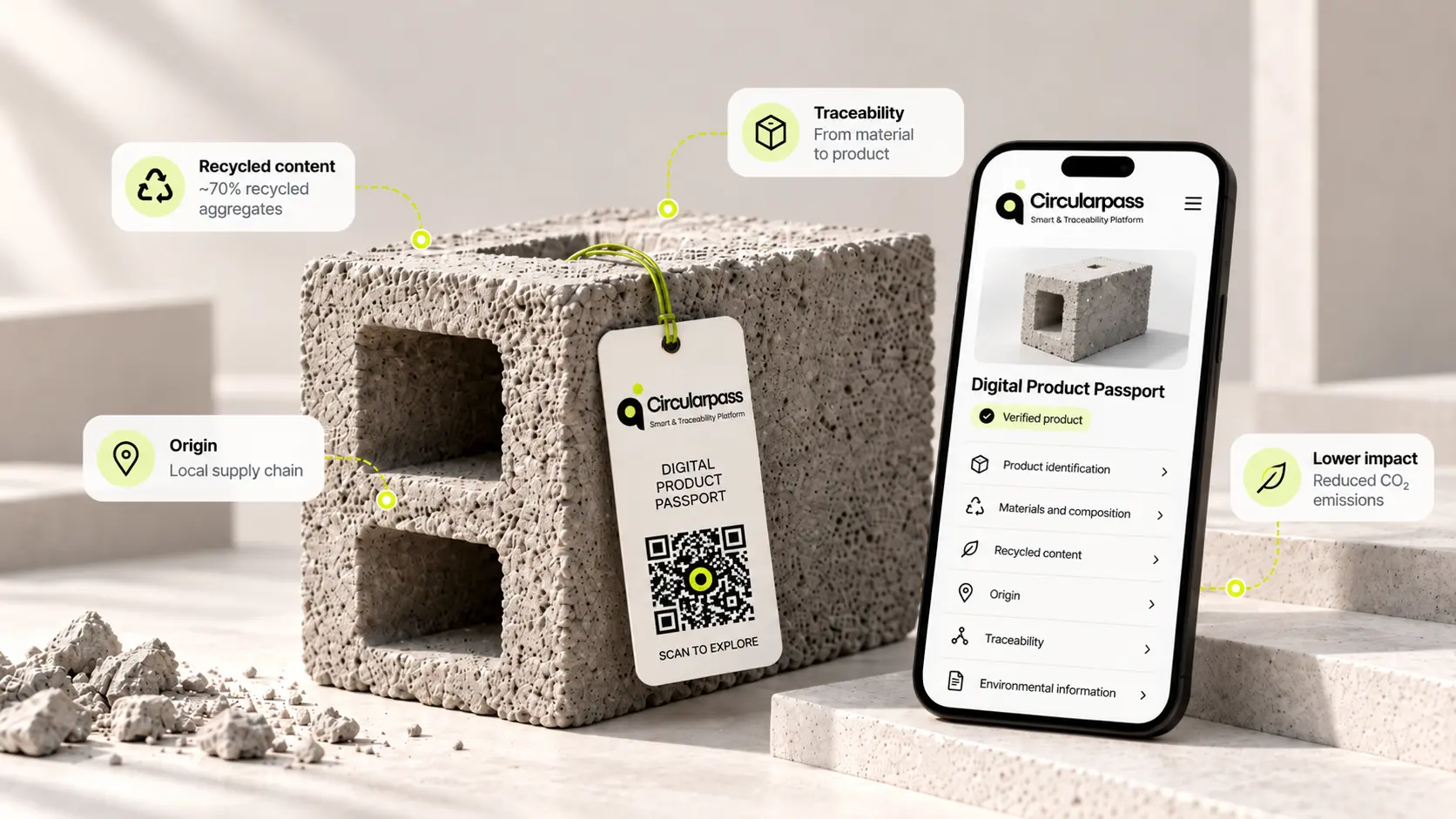
Digital Product Passport example: what a DPP looks like and how it works
See what a Digital Product Passport looks like in practice, what information it can contain, and how companies can prepare and implement their first DPP.

Digital Battery Passport under the EU Battery Regulation: requirements and how to prepare for 2027
Learn what the digital battery passport is, what the EU Battery Regulation requires, and how companies should prepare for 2027.
Join our sustainable
community
Join our sustainable community
Developed by Blue Room Innovation - blueroominnovation.com
CONTACT US:
Blue Room Innovation, SL
Email: info@blueroominnovation.com
Adress: Carrer de Santa Eugènia, 7 local, 17001 Girona