
ARTICLE | 8 Min
PPWR Regulation: what it is, key requirements and how it affects businesses
EasyTrack: prepare your Digital Product Passport without starting from scratch
August 25, 2026
In this article
The PPWR Regulation is set to reshape the way companies design, manage and document packaging across the European Union. Far from being just another environmental requirement, it introduces a new framework that affects how packaging is conceived, what materials are used, how much recycled content it contains, how easily it can be recycled and how companies demonstrate compliance.
The Regulation (EU) 2025/40 on packaging and packaging waste, known as the PPWR (Packaging and Packaging Waste Regulation), is one of the most significant pieces of EU legislation affecting packaging in recent years. Its goal is to reduce packaging waste, improve circularity and create a more harmonised approach across the European market.
For companies, this means that packaging decisions can no longer be treated solely as a matter of design, cost or logistics. They are increasingly becoming a matter of regulatory compliance, data management and traceability.
Businesses will need to understand the composition of their packaging in greater detail, assess recyclability, monitor recycled content, manage supplier information and retain the evidence required to support compliance claims. For organisations managing hundreds or thousands of product references, this can quickly become a complex data challenge.
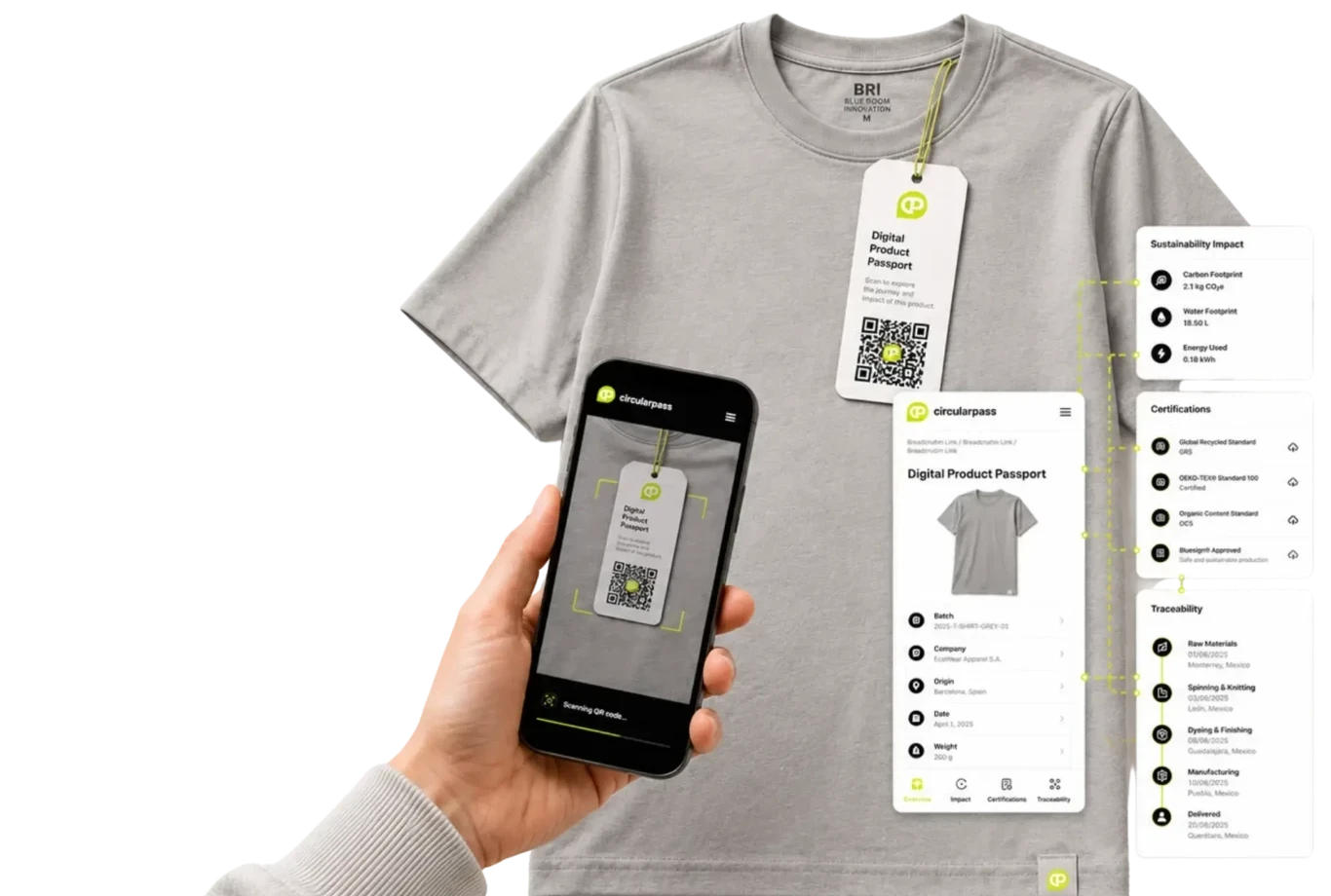
At the same time, the PPWR is part of a broader shift in European regulation towards more transparent and digitally accessible product information. This evolution is closely linked to concepts such as the Digital Product Passport, which is becoming increasingly relevant as companies prepare for new sustainability and traceability requirements.
In this article, we explain what the PPWR Regulation is, when it applies, which companies are affected, its main requirements and how businesses can prepare their packaging data and digital infrastructure for compliance.
What is the PPWR Regulation?
The PPWR Regulation, short for Packaging and Packaging Waste Regulation, is the European Union’s new legal framework for packaging and packaging waste.
Its official reference is Regulation (EU) 2025/40. It replaces the previous framework based on Directive 94/62/EC and introduces a more harmonised set of rules that applies directly across EU Member States.
The Regulation establishes common requirements for how packaging is designed, placed on the market and managed at the end of its life. Its scope covers virtually all types of packaging and materials used across the European market.
One of the key changes introduced by the PPWR is the move from a directive-based system, which required national implementation, to a directly applicable EU regulation. This is intended to reduce differences between national rules and create a more consistent regulatory environment for companies operating in multiple European markets.
In practical terms, the PPWR sets the framework that businesses will need to follow when developing, sourcing and commercialising packaging in the EU over the coming years.
When does the PPWR Regulation apply?
Regulation (EU) 2025/40 entered into force on 11 February 2025 and applies generally from 12 August 2026.
However, many of its requirements will be introduced progressively. The Regulation establishes a number of key milestones over the coming years, particularly in 2030, 2035 and 2040, covering recyclability, recycled content, waste prevention and reuse.
This means businesses need to work across two time horizons at once: complying with current requirements while preparing their packaging portfolios for upcoming regulatory obligations.
Which companies are affected by the PPWR Regulation?
The PPWR has a very broad scope and applies to packaging placed on the European market, regardless of the material used, subject to the specific exemptions and provisions set out in the Regulation.
It can affect packaging manufacturers, product manufacturers, brands, importers, distributors, retailers, e-commerce companies, packaging suppliers and, more generally, companies that place packaged products on the EU market.
The PPWR is therefore not a regulation that only concerns the packaging industry. Sectors such as food and beverage, cosmetics, fashion, electronics, pharmaceuticals, industrial products and consumer goods will also need to review how they manage packaging and the information associated with it.
Main requirements of the PPWR Regulation
Packaging recyclability
One of the main objectives of the PPWR Regulation is to ensure that packaging placed on the European market is designed to be recyclable.
The year 2030 will be one of the major milestones in this area. Recyclability will depend on factors such as the materials used, combinations of components, labels, adhesives, closures, inks and multilayer structures.
This means companies will need a much more detailed understanding of the technical composition of each packaging format and structured information that allows them to identify which references comply and which require redesign.
Recycled content
The PPWR also establishes minimum recycled content requirements for certain categories of plastic packaging, with targets increasing progressively over time.
For companies, this means understanding not only which materials are being used, but also what percentage comes from recycled sources and what evidence can be used to verify this information.
Supplier data, certificates and technical documentation will therefore play a central role. Material traceability will be essential for demonstrating compliance consistently.
Reducing unnecessary packaging
The PPWR Regulation places strong emphasis on prevention and aims to limit the use of packaging materials and formats that are not necessary to protect, transport or market a product properly.
Companies will need to review packaging weight, volume, empty space, additional components and certain overpackaging practices.
Reducing material use is not only a regulatory requirement. It can also result in lower production, storage and transport costs.
Reuse and refill
The Regulation also promotes reuse and refill models for certain categories.
This represents a shift away from the traditional logic of single-use packaging and towards systems in which packaging can complete multiple use cycles.
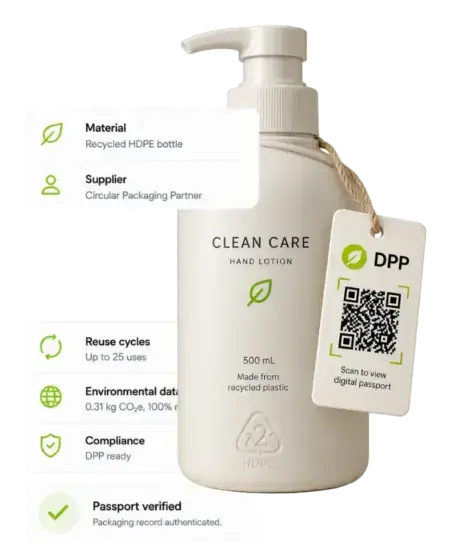
In this context, companies will increasingly need information on units in circulation, returns, number of use cycles, reconditioning and end-of-life status. Digital traceability can significantly simplify the management of these models.
Labelling and information
The PPWR also introduces new requirements aimed at harmonising packaging information across Europe and making it easier for consumers and waste operators to identify materials correctly and understand how packaging should be managed.
The Regulation also includes different mechanisms for providing information digitally. This reinforces a broader trend: packaging will no longer be only a physical container, but also a gateway to information about materials, circularity and compliance.
The major PPWR challenge: managing packaging data
Many companies are focusing their PPWR preparation exclusively on the physical redesign of packaging. However, there is another challenge that is just as important: data management.
To demonstrate that a packaging reference complies with the Regulation, companies may need access to information about materials, components, weights, recycled content, recyclability, suppliers, certificates, technical documentation and end-of-life instructions.
The challenge appears when this information is spread across spreadsheets, ERP systems, technical data sheets, emails, PDFs and different supplier platforms.
As long as a company manages only a limited number of references, this may remain manageable. But as the portfolio grows and products are sold across multiple markets, maintaining this information manually becomes increasingly risky.
Preparing for the PPWR therefore also means building a structured, reliable and up-to-date source of packaging information.
PPWR Regulation and the Digital Product Passport: how are they connected?
The PPWR Regulation and the Digital Product Passport (DPP) are part of the same broader regulatory evolution in Europe: creating more reliable, structured and accessible information about products, materials and their impact throughout the life cycle.
The PPWR does not generally require all packaging to have a Digital Product Passport. However, it significantly increases the amount of information companies need to know, manage and be able to substantiate about their packaging.
Data such as composition, materials used, recycled content, recyclability, supplier information and compliance evidence are becoming increasingly important.
In this context, a Digital Product Passport infrastructure can be particularly valuable for organising and connecting this information.
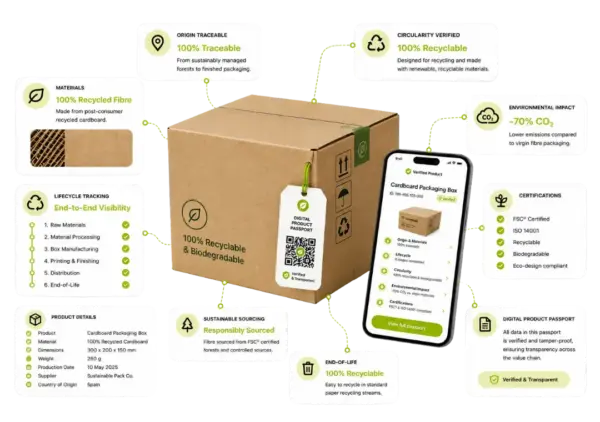
Instead of keeping data scattered across spreadsheets, technical data sheets, certificates and internal systems, a digital passport can link structured information to each product or packaging reference and keep it accessible and up to date.
This creates a foundation that can support PPWR-related requirements while also preparing companies for other European regulatory frameworks linked to the circular economy and the ESPR (Ecodesign for Sustainable Products Regulation).
Preparing for PPWR compliance with CircularPass
Preparing for the PPWR Regulation requires more than redesigning packaging. Companies also need to understand, organise and maintain the data that supports compliance.
A strong starting point is to build a clear inventory of the packaging placed on the market and structure the information associated with each reference, including materials, components, recycled content, recyclability, suppliers and supporting documentation.
Once this information is organised, businesses can identify compliance gaps, prioritise the packaging formats that require changes and connect each claim with the evidence that supports it, such as supplier declarations, certificates, technical documentation or test results.
This is where CircularPass can play a key role.
CircularPass helps companies centralise and structure product and packaging information within a single digital environment, making it easier to manage data across the value chain and maintain a reliable source of compliance information.
Instead of relying on disconnected spreadsheets, PDFs and internal systems, companies can connect packaging composition, supplier data, recycled content, recyclability information, certificates and regulatory evidence in one structured infrastructure.
This approach not only supports PPWR compliance. It also creates a foundation that can evolve towards Digital Product Passport models and future European traceability requirements.
As EU regulation moves towards more transparent, structured and digitally accessible product information, companies that organise their packaging data now will be better prepared for both current obligations and what comes next.
CircularPass helps turn fragmented product and packaging data into a structured, traceable and reusable source of information for PPWR compliance, Digital Product Passports and the wider transition towards a circular economy.
Related articles
February 2, 2026
Ecodesign Regulation for Sustainable Products (ESPR): what it requires and how to prepare for 2026
An overview of the ESPR Regulation, its requirements, implementation timeline and what companies need to prepare for 2026.

January 20, 2026
The Digital Product Passport in 2026: a key enabler for traceability and sustainability in Europe
What the Digital Product Passport is, why it becomes essential in 2026, and how companies can prepare for Europe’s new traceability standard.

February 11, 2026
Digital Product Passport for textiles: a revolution in the fashion industry
Discover how the digital product passport for textiles is revolutionizing the fashion industry by providing full traceability, sustainability, and transparency.
Start your journey to supply chain transparency today
Discover Blue Room Innovation, the tech company powering CircularPass, where digital solutions meet environmental impact to build a smarter, more circular future.