
The Digital Product Passport in 2026: a key enabler for traceability and sustainability in Europe
The Digital Product Passport in 2026: a key enabler for traceability and sustainability in Europe

In this article
The Digital Product Passport is becoming one of the central pillars of the European market transformation in 2026, driven by a regulatory framework that demands greater transparency, traceability, and control over products placed on the market. The so-called DPP (Digital Product Passport) represents a fundamental shift: products are no longer understood solely as physical goods, but as digital entities with a persistent identity, capable of carrying verified information throughout their entire life cycle.
In this new context, the Digital Product Passport is no longer a future concept or a regulatory experiment. It is becoming a structural component of the European market, with direct implications for manufacturers, distributors, repairers, recyclers, and public authorities.
What is a Digital Product Passport and why it marks a structural shift in Europe
A Digital Product Passport is a digital system that enables a unique identification of a product and links it to reliable information about its composition, origin, sustainability performance, and life-cycle behaviour. This information is not limited to a single phase, but accompanies the product from design and manufacturing through use, repair, reuse, and end-of-life treatment.
Unlike traditional technical documentation, the DPP is designed as a dynamic data infrastructure, capable of incorporating real-world events as the product evolves. This allows different actors to access relevant information depending on their role, operational needs, and applicable regulatory requirements.
This approach reflects a clear shift in the European market: transparency is no longer an added value, but a condition for market access.
The Digital Product Passport within the ESPR framework
The Ecodesign for Sustainable Products Regulation (ESPR) provides the overarching legal framework that positions the Digital Product Passport at the core of Europe’s sustainable product policy. Through the ESPR, ecodesign requirements are extended beyond technical performance to include mandatory digital product information covering the entire life cycle.
The regulation establishes obligations related to unique product identification, performance and durability, the presence of substances of concern, and information needed to support repair, reuse, recycling, and proper end-of-life management.
Within this framework, the DPP becomes the mechanism that allows such information to be structured, governed, and shared consistently, aligning all stakeholders around a common data standard.
Sectors affected by the Digital Product Passport and related regulations
Batteries, including those used in electric vehicles, are the most advanced sector, with concrete digital information requirements already defined and mandatory implementation expected from 2026 onwards.
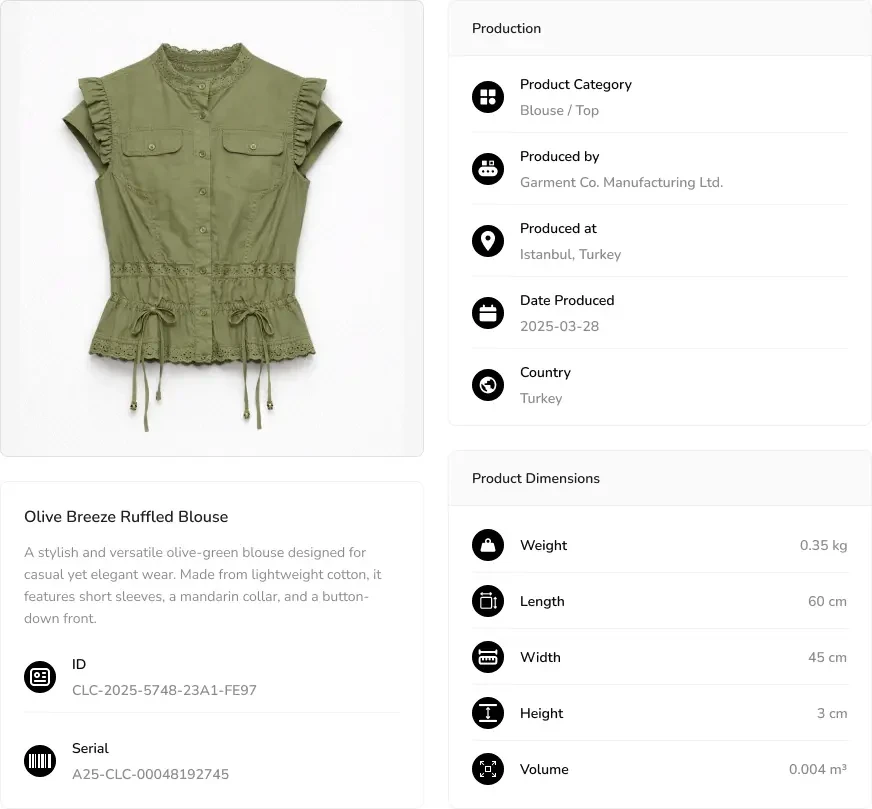
Textiles and electronics are also identified as priority areas, where the DPP will support traceability of materials, production processes, durability, and recyclability. In parallel, construction materials and industrial products such as steel will increasingly rely on Digital Product Passports to provide reliable data on origin, emissions, and environmental performance.
Other sectors, including packaging, plastics, furniture, and certain chemical products, will be incorporated gradually through delegated acts, making the DPP a cross-sector European standard rather than a sector-specific obligation.
What information does a Digital Product Passport contain?
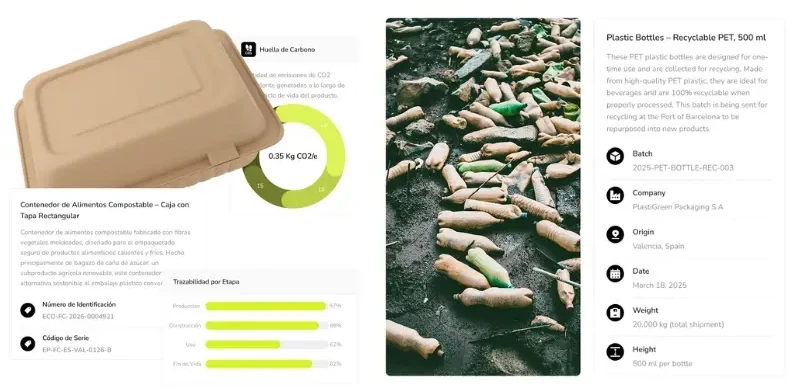
In 2026, the Digital Product Passport is best understood as a layered information structure, rather than a single document. It includes core identification data, such as a digital product identifier, manufacturer, and origin, complemented by information on materials, composition, and regulatory compliance.
Additional layers cover sustainability-related data, including environmental footprints, certifications, and circularity criteria, as well as practical information supporting use, repair, and end-of-life treatment.
Each layer serves a specific purpose and is designed to be accessible to different stakeholders, from industrial operators to authorities and recyclers, while ensuring data consistency, traceability, and governance.
From compliance to competitive advantage: preparing for the DPP in 2026
One of the most common mistakes in 2026 is to treat the Digital Product Passport as a documentation exercise. In practice, the DPP operates as a traceability infrastructure, capable of recording real-world events and connecting data from multiple systems and technologies.
Preparing for the DPP often involves integrating enabling technologies, such as IoT systems for data capture, digital identifiers accessible via QR codes or NFC, and platforms that can interoperate with industrial, logistical, and regulatory systems. This technological layer ensures that product information remains dynamic, verifiable, and reusable.
Beyond regulatory compliance, a well-designed DPP helps organisations optimise internal processes, reduce friction during audits, strengthen relationships with partners and customers, and enable circular business models based on repair, reuse, and value recovery.
In this context, CircularPass is part of the technology ecosystem developed by Blue Room Innovation, an organisation specialised in advanced digital solutions for traceability and circular economy data management in regulated European and international environments.
How to take the next step towards a Digital Product Passport
Implementing a Digital Product Passport is not just a technical decision, but a strategic one that affects data governance, regulatory compliance, and long-term competitiveness. Acting early allows organisations to structure product information properly, adapt processes with sufficient lead time, and avoid reactive implementations as obligations enter into force.
At CircularPass, we support companies and public authorities in designing, deploying, and scaling Digital Product Passports for products and waste, fully aligned with European regulation and ready to evolve with sector-specific requirements.
If you would like to explore how the Digital Product Passport applies to your organisation, understand which regulations affect your sector, or assess a tailored implementation approach, you can get in touch with our team and take the first step towards a future-ready solution.
Related articles

February 11, 2026
Discover how the digital product passport for textiles is revolutionizing the fashion industry by providing full traceability, sustainability, and transparency.
February 2, 2026
An overview of the ESPR Regulation, its requirements, implementation timeline and what companies need to prepare for 2026.
Start your journey to supply chain transparency today
At CircularPass, we believe collaboration is key to driving sustainability and traceability. If you have any questions, ideas, or simply want to learn more about our work, feel free to reach out.