Product Details
Production Details
Recycled Gypsum Powder
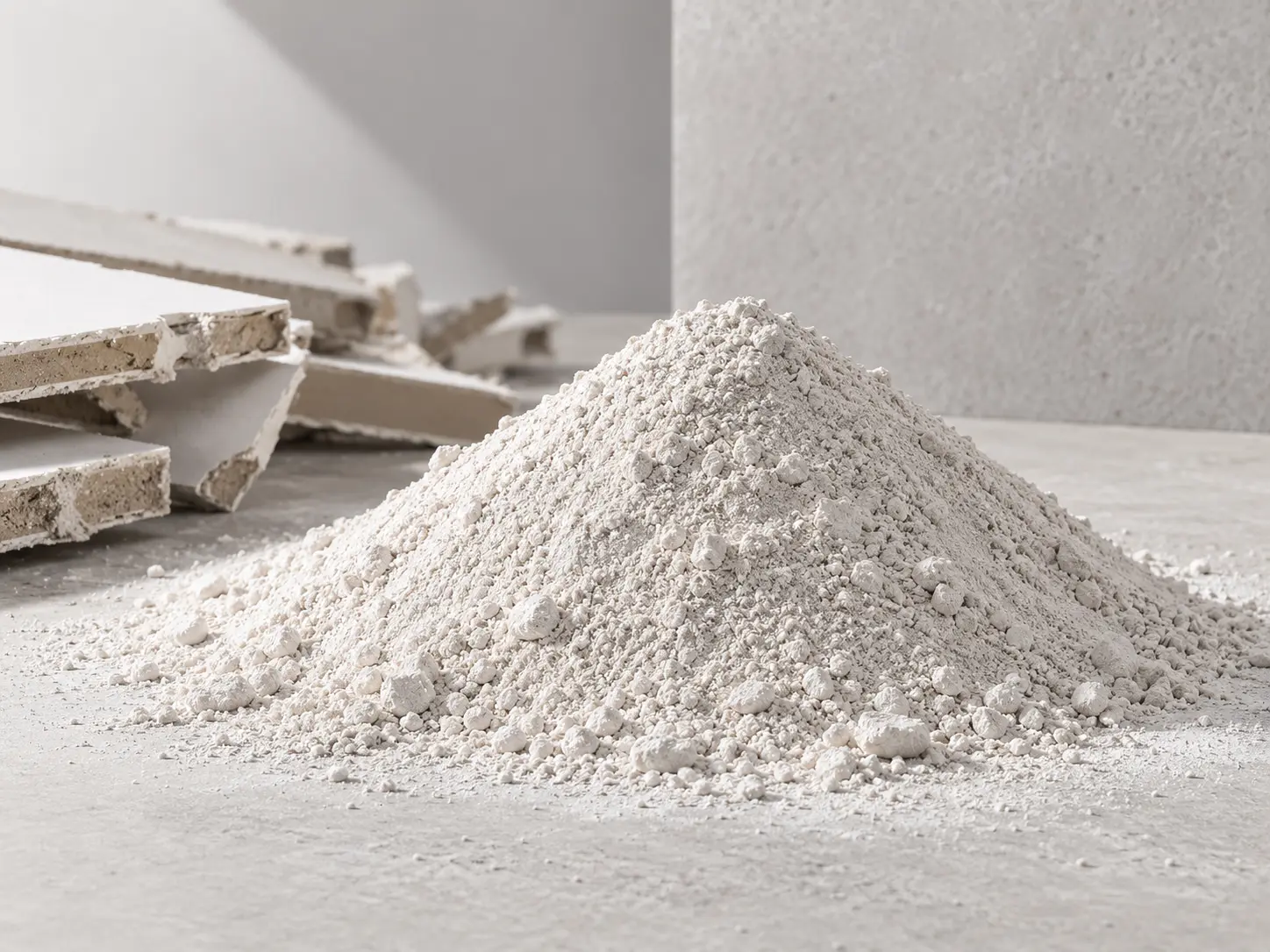
Recycled Gypsum Powder is a secondary mineral raw material obtained by processing waste plasterboards from construction, renovation, selective demolition and manufacturing. Reception, sorting, mechanical crushing, impurity removal and paper separation recover a gypsum mineral fraction, primarily calcium sulfate dihydrate (CaSO₄·2H₂O). It may be used in new plasterboards and other gypsum-based products when manufacturing and quality specifications are met.
Product Specifications
Packaging Specifications
Product Recycling
Hypothetical recycled content from recovered waste plasterboard. This is distinct from 88% gypsum mineral purity.
Environmental Impact & Sustainability
Carbon Footprint
Illustrative recycling and transport scenario. Excludes downstream manufacturing and substitution credits.
Direct Plant Water Use
Estimated direct plant water consumption; this is not a lifecycle water footprint.
Energy Consumption
Estimated mechanical processing energy without intensive thermal drying or systematic wet washing.
Traceability
Overall Product Traceability
Fictitious interface score. No established scoring methodology is implied.
Traceability by Stage
Products
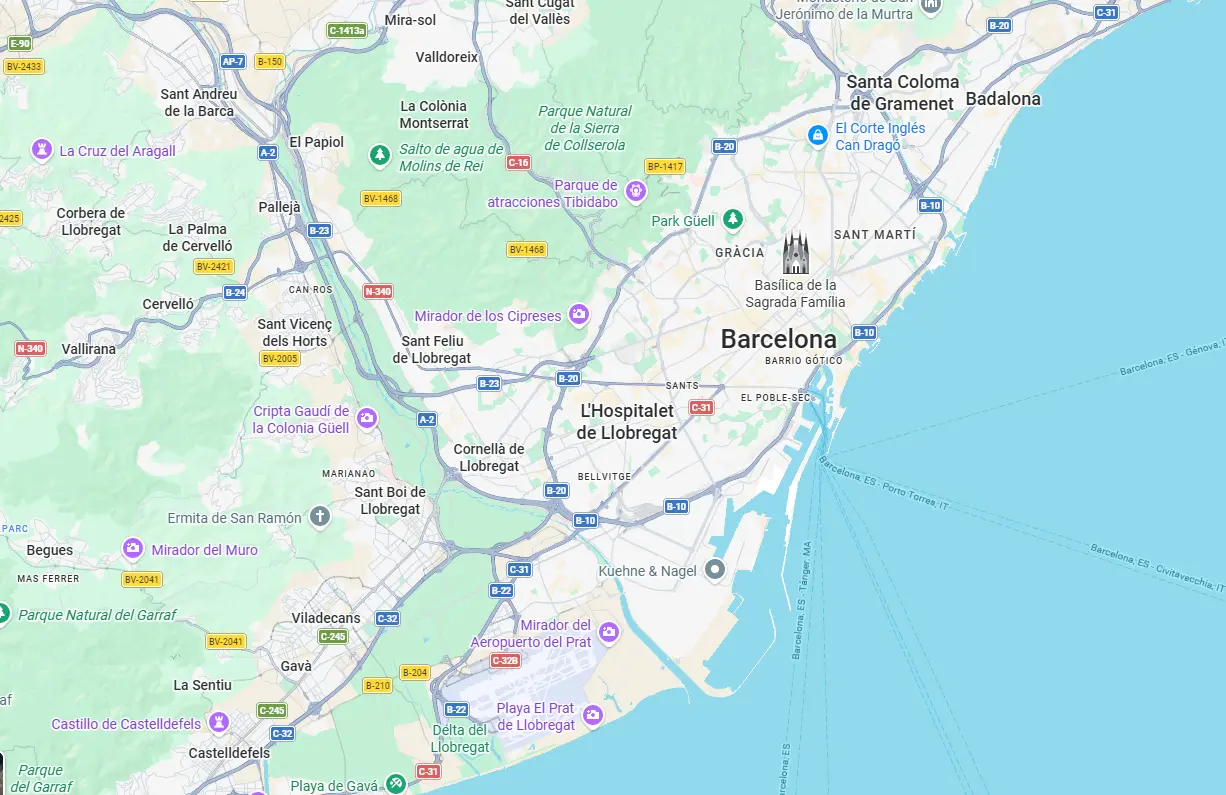
Waste plasterboards collected on 15 October 2026 (example). Construction 55%; selective demolition 25%; manufacturing offcuts 18%; compatible virgin corrective material 2%. Average collection radius 60 km.
Bulk truck; 24 t capacity; 80 km average distribution; dispatch 20 October 2026; SHIP-RGP-2026-001; transport emissions 3 kg CO₂e/t (hypothetical). Supplier: Circular Gypsum Recycling, S.L.; recipient: fictitious gypsum-board manufacturer.
16 October 2026: reception, sorting, crushing, paper separation, screening, homogenisation and quality control. Fictitious capacity 10 t/h; 8 h/day. Batch balance: 25.20 t waste + 0.48 t corrective material = 24.00 t product + 1.68 t separated fractions.
Components
Recycled Gypsum Powder · Demonstration product passport
Components & composition
| Component | Estimated Mass Fraction | Composition / Description |
|---|---|---|
| Calcium sulfate dihydrate (CaSO₄·2H₂O) | 88.0% | Main mineral component |
| Free moisture | 5.0% | Water not chemically bound to gypsum |
| Residual paper and other organic materials | 2.0% | Possible residual paper fibres and organic additives |
| 5.0% | Estimated combined fraction of other mineral constituents | |
| Calcium carbonate (CaCO₃) | Included in mineral impurities, if present | Possible natural impurity |
| Dolomite (CaMg(CO₃)₂) | Included in mineral impurities, if present | Possible natural impurity |
| Silica (SiO₂) | Included in mineral impurities, if present | Possible natural impurity |
| Clay minerals | Included in mineral impurities, if present | Possible natural impurity |
| Anhydrite (CaSO₄) | Included in mineral impurities, if present | Possible associated mineral |
| Total | 100.0% | Illustrative composition |
Usage
Recycled Gypsum Powder · Demonstration product passport
Recommended applications
End of life
Recycled Gypsum Powder · Demonstration product passport
Circular end-of-life scenario
Potential recycling of new gypsum boards through selective collection, sorting, separation and reprocessing. Hypothetical future recovery: 90%. Actual viability depends on quality, infrastructure and waste-management conditions.
Usage
Energy Consumption
Estimated mechanical processing energy per tonne of finished product.
18 kWh/tWater Consumption
Estimated direct plant consumption, not a lifecycle footprint.
8 L/tEnergy Efficiency
Fictitious internal rating: B. Not a recognised certification label.
Water Efficiency
Fictitious internal rating: A. Not a recognised certification label.
Materials / Consumables
| Material / consumable | Content or consumption | Recovery / reuse |
|---|---|---|
| Recovered solids from plasterboards | 98%; 980 kg/t finished product | Potential industrial recycling |
| Compatible virgin corrective material | 2%; 20 kg/t | Potential recycling |
| Electricity | 18 kWh/t; not incorporated | Not applicable |
| Process water | 8 L/t; not incorporated | Possible recirculation |
| Machinery diesel | 0.5 L/t; not incorporated (scenario) | Not applicable |
Repairability & Maintenance
Circularity in Use
High potential under suitable segregation; hypothetical future recovery.
Assumed recycled content in finished material.
Service Life
Indicative dry-storage period; unverified.
12 monthsInteroperability
Potential with manufacturing lines accepting recycled gypsum.
Intended Use
New plasterboards and other gypsum products, subject to manufacturing specifications.
Usage Precautions
Protect from moisture and contamination. Minimise dust and verify batch quality before use.
Required Skills
Operators trained in powder handling, dust controls and safe industrial operation.
Compatibility with Other Products or Systems
Appropriately specified gypsum manufacturing lines, subject to manufacturer acceptance.
Ecodesign
Guaranteed Service Life
Dry storage, protected from moisture and contamination.
12 months (hypothetical)Mineral material assumed stable in suitable storage.
Suitable dry storageProduct Reliability
Not directly applicable to a raw material.
Not applicableNot applicable to loose powder.
Not applicableComponent Repair & Reuse
Remanufacturing & Reuse
Planned datasheet, lot declaration and test report.
Conventional recovered mineral gypsum fraction.
Eurogypsum 2024 targetCrusher, separation system, screen and handling machinery.
VGB-M 701 and Eurogypsum-listed reference standards.
No particular proprietary process assumed.
Hypothetical recovery under favourable future collection and separation conditions.
90% potential recoveryPotential closed-loop gypsum recycling.
98% recycled contentMaterials
98% recovered fraction from waste plasterboards; 2% compatible primary corrective material.
View origin breakdown
Construction 55%; selective demolition 25%; manufacturing 18%; virgin corrective material 2%.
View complete composition
Gypsum 88%; free moisture 5%; residual paper and other organic materials 2%; other mineral constituents 5%. Total: 100%.
Composition and analytical basis
TOC 1.2% is not the same as the 2% organic-material mass fraction. Actual reporting must specify dry-mass versus wet-mass conventions. Treemap tiles are selectable categories; their layout is not to scale.
Materials & Components
Batch declaration
RGP-1026-B01; 24,000 kg; 98% hypothetical recycled content.
Screening record
Grading record by batch. Sampling scenario: one composite sample per 250 tonnes.
Quality analysis
Purity, moisture, TOC and impurity assessment against customer specifications and Eurogypsum 2024 references. Appropriately accredited laboratory where required.
Supplier documentation
Delivery notes, weighing records, origin records and waste paperwork.
| Material origin | Estimated share | Classification |
|---|---|---|
| Construction plasterboard waste | 55% | Post-consumer |
| Selective demolition plasterboard waste | 25% | Post-consumer |
| Manufacturing offcuts / waste | 18% | Pre-consumer |
| Virgin corrective material | 2% | Primary, if used |
| Component | Estimated Mass Fraction | Composition / Description |
|---|---|---|
| Calcium sulfate dihydrate (CaSO₄·2H₂O) | 88.0% | Main mineral component |
| Free moisture | 5.0% | Water not chemically bound to gypsum |
| Residual paper and other organic materials | 2.0% | Possible residual paper fibres and organic additives |
| 5.0% | Estimated combined fraction of other mineral constituents | |
| Calcium carbonate (CaCO₃) | Included in mineral impurities, if present | Possible natural impurity |
| Dolomite (CaMg(CO₃)₂) | Included in mineral impurities, if present | Possible natural impurity |
| Silica (SiO₂) | Included in mineral impurities, if present | Possible natural impurity |
| Clay minerals | Included in mineral impurities, if present | Possible natural impurity |
| Anhydrite (CaSO₄) | Included in mineral impurities, if present | Possible associated mineral |
| Total | 100.0% | Illustrative composition |
Processing sequence
1. Reception of waste plasterboards. 2. Sorting and separation. 3. Mechanical crushing. 4. Paper separation. 5. Screening and homogenisation to 0–5 mm. 6. Quality control. 7. Covered storage and distribution to gypsum-product manufacturers.
Mass balance and yield
1,050 kg waste → 980 kg recovered fraction + 70 kg separated fractions. Add 20 kg corrective material → 1,000 kg finished product. Yield: 93.3% of incoming waste; recycled content: 98% of finished product. These indicators use different denominators.
Sustainability
Hypothetical potential, subject to collection and quality.
95%Assumed recovered feedstock in finished material.
98%Fictitious internal indicator.
90%Fictitious internal indicator.
88%Direct plant use only; not a lifecycle water footprint.
Environmental Impact Categories
Global warming potential — 15 kg CO₂e/t
Fictional placeholder from the illustrative PDF. No defined LCA method or supporting assessment; not a measured result.
Human toxicity — 0.000001 CTUh/t
Fictional placeholder from the illustrative PDF. No defined LCA method or supporting assessment; not a measured result.
Respiratory particulate matter — 0.010 kg PM2.5-eq/t
Fictional placeholder from the illustrative PDF. No defined LCA method or supporting assessment; not a measured result.
Photochemical ozone formation — 0.020 kg NMVOC-eq/t
Fictional placeholder from the illustrative PDF. No defined LCA method or supporting assessment; not a measured result.
Ozone depletion potential — 0.000000001 kg CFC-11-eq/t
Fictional placeholder from the illustrative PDF. No defined LCA method or supporting assessment; not a measured result.
Assessment boundary
Waste reception, recycling and outward distribution. Excludes downstream plasterboard manufacturing and credits for virgin-gypsum substitution.
LCA / EPD status
LCA method not defined. These are not LCA results. No Environmental Product Declaration is available in this scenario.
| Indicator | Illustrative value | Status |
|---|---|---|
| Global warming potential | 15 kg CO₂e/t | Fictional placeholder; not an LCA result |
| Human toxicity | 0.000001 CTUh/t | Fictional placeholder; not an LCA result |
| Respiratory particulate matter | 0.010 kg PM2.5-eq/t | Fictional placeholder; not an LCA result |
| Photochemical ozone formation | 0.020 kg NMVOC-eq/t | Fictional placeholder; not an LCA result |
| Ozone depletion potential | 0.000000001 kg CFC-11-eq/t | Fictional placeholder; not an LCA result |
Recovering gypsum from waste plasterboards may retain mineral resources in construction supply chains, reduce primary feedstock demand and avoid some disposal. Any environmental benefit requires quantification through an appropriate life cycle assessment.
Recycling
Fictional internal score; no validated methodology or external certification.
How is the score calculated?
Sorting and separation 90/100; recovery potential 95/100; infrastructure availability 80/100; recovered-material quality potential 85/100. Total: 350/400.
Waste Generated — Hypothetical Mass Balance
Per 1,050 kg incoming waste plasterboards: 980 kg recovered fraction and 70 kg separated fractions. Add 20 kg compatible virgin corrective material to obtain 1,000 kg finished product.
| Separated fraction | kg / 1,050 kg waste input | Handling |
|---|---|---|
| Paper and lightweight residues | 45 | Segregation; recovery where feasible |
| Foreign / inert materials | 15 | Characterise; authorised operator |
| Other processing residues | 10 | Characterise; authorised operator |
| Total separated | 70 | Not automatically non-recoverable |
93.3% = 980/1,050. The 1.0% scenario assumes 10 kg residues are not recovered. These figures differ from 98% recycled content in finished product.
Digital datasheet
Digital datasheet linked to CircularPass DPP; analytical data are simulated.
Technical specification
Eurogypsum Quality Criteria (2024), as a reference; conformity not demonstrated.
Batch and supplier records
Identification, processing history, delivery, weighing and origin records.
Planned analytical results
Particle size, moisture, purity, TOC and other relevant testing.
Recycling information
Treatment processes and potential recovery routes.
Separate plasterboard waste and avoid incompatible contamination. Monitor grading, moisture, purity, TOC, soluble salts, chlorides, pH and visible foreign matter.
Acceptance and sampling
Eurogypsum 2024 provides reference criteria. Actual customer acceptance and applicable regulations determine use. Sampling and assessment programmes require individual agreement.
Waste classification
Depends on origin, composition and applicable laws. Waste code to be determined after characterisation; transfer to authorised operators.
Operating precautions
Store in covered, dry facilities and prevent water ingress. Avoid incompatible wastes, organics, metals and plastics. Minimise dust during loading, transport and unloading. Use dust controls and PPE appropriate to the occupational risk assessment. Verify batch specifications before industrial incorporation. General precautions do not replace product-specific safety documents.
Traceability
Overall Product Traceability
Fictitious interface score. No established scoring methodology is implied.
Traceability by Stage
Products
Waste plasterboards collected on 15 October 2026 (example). Construction 55%; selective demolition 25%; manufacturing offcuts 18%; compatible virgin corrective material 2%. Average collection radius 60 km.
Bulk truck; 24 t capacity; 80 km average distribution; dispatch 20 October 2026; SHIP-RGP-2026-001; transport emissions 3 kg CO₂e/t (hypothetical). Supplier: Circular Gypsum Recycling, S.L.; recipient: fictitious gypsum-board manufacturer.
16 October 2026: reception, sorting, crushing, paper separation, screening, homogenisation and quality control. Fictitious capacity 10 t/h; 8 h/day. Batch balance: 25.20 t waste + 0.48 t corrective material = 24.00 t product + 1.68 t separated fractions.
Components
Recycled Gypsum Powder · Demonstration product passport
Components & composition
| Component | Estimated Mass Fraction | Composition / Description |
|---|---|---|
| Calcium sulfate dihydrate (CaSO₄·2H₂O) | 88.0% | Main mineral component |
| Free moisture | 5.0% | Water not chemically bound to gypsum |
| Residual paper and other organic materials | 2.0% | Possible residual paper fibres and organic additives |
| 5.0% | Estimated combined fraction of other mineral constituents | |
| Calcium carbonate (CaCO₃) | Included in mineral impurities, if present | Possible natural impurity |
| Dolomite (CaMg(CO₃)₂) | Included in mineral impurities, if present | Possible natural impurity |
| Silica (SiO₂) | Included in mineral impurities, if present | Possible natural impurity |
| Clay minerals | Included in mineral impurities, if present | Possible natural impurity |
| Anhydrite (CaSO₄) | Included in mineral impurities, if present | Possible associated mineral |
| Total | 100.0% | Illustrative composition |
Usage
Recycled Gypsum Powder · Demonstration product passport
Recommended applications
End of life
Recycled Gypsum Powder · Demonstration product passport
Circular end-of-life scenario
Potential recycling of new gypsum boards through selective collection, sorting, separation and reprocessing. Hypothetical future recovery: 90%. Actual viability depends on quality, infrastructure and waste-management conditions.