Product Details
Production Details
Recycled Aggregate
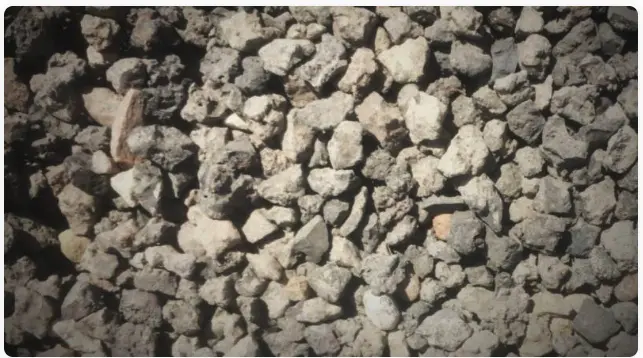
Recycled concrete aggregate is crushed and processed material recovered from construction and demolition (C&D) and excavation waste, including concrete and masonry. It is characterized by its rough texture, variable composition, and sufficient strength for use in subbase and backfill applications. The material undergoes screening and quality control to ensure suitability for reuse, contributing to environmental sustainability by reducing landfill waste.
Product Specifications
Packaging Specifications
Product Recycling
Estimated recycled input content from recovered concrete and masonry. Illustrative figure only.
Usage
Recycled concrete aggregate is used as subbase material for roads, backfilling, and some non-structural concrete applications.
Environmental Impact & Sustainability
Carbon Footprint
Estimated cradle-to-gate emissions from sorting, crushing and local transport.
Water Footprint
Estimated water demand across crushing, washing, and dust suppression activities.
Energy Consumption
Estimated processing energy for crushing, screening and handling.
Traceability
Overall Product Traceability
Illustrative completeness score across the material recovery and processing journey.
Traceability by Stage
Products
- Construction waste receptionDemonstration process
- Manual and mechanical sortingDemonstration process
- Crushing and metal removalDemonstration process
- Screening and gradingDemonstration process
Typical demonstration dispatch: covered tipper truck, 18–25 tonne payload and an estimated 35 km one-way transport radius.
Dispatch reference: SHIP-2026-088 · Supplier: Al-Awalia Recycling Facility (illustrative).
Crushing, ferrous separation and screening produce a graded mineral fraction. Visual sorting reduces foreign materials before dispatch.
Illustrative batch throughput: 110 tonnes/hour.
Components
Recycled Aggregate · Demonstration product passport
Components & composition
Illustrative example only. Not validated product data.
Usage
Recycled Aggregate · Demonstration product passport
Recommended applications
Illustrative example only. Not validated product data.
End of life
Recycled Aggregate · Demonstration product passport
Circular end-of-life scenarios
Illustrative example only. Not validated product data.
Usage
Energy Consumption
Total energy estimated for crushing, screening and site handling per tonne of recycled aggregate.
7.8 kWh/tWater Consumption
Estimated process water used for dust suppression and washing per tonne.
42 L/tEnergy Efficiency
Illustrative operating grade: B (not a certified energy label).
Water Efficiency
Illustrative operating grade: B (not a certified water label).
Consumables
| Material | % of Product | CAS Number | GTIN | Mass Resource | Lifetime | Yield | Reuse | Repair | Remanufacture | Interoperability |
|---|---|---|---|---|---|---|---|---|---|---|
| Recovered concrete | 72% | N/A | N/A | 720 kg/t | 25+ years | 91% | High | N/A | Crush again | High |
| Recovered masonry | 18% | N/A | N/A | 180 kg/t | 25+ years | 86% | High | N/A | Crush again | Medium |
| Recovered natural stone | 5% | N/A | N/A | 50 kg/t | 25+ years | 94% | High | N/A | Re-screen | High |
| Virgin grading additive | 5% | N/A | N/A | 50 kg/t | 25+ years | 97% | Medium | N/A | Re-screen | High |
| Process water | Not retained | 7732-18-5 | N/A | 42 L/t input | Process only | 75% recycled | In-plant | N/A | N/A | High |
| Diesel (handling) | Not retained | Mixture | N/A | 0.34 L/t input | Process only | N/A | No | N/A | N/A | Medium |
Repairability & Maintenance
Circularity in Use
Estimated share of uncontaminated aggregate potentially suitable for collection and reprocessing.
Potential reduction of virgin mineral input compared with a like-for-like conventional subbase.
Service Life
Indicative service life in a correctly compacted, drained and maintained road subbase.
25+ yearsInteroperability
Suitable for compatible unbound road subbase, backfill and non-structural civil engineering systems, subject to grading and local design approval.
Intended Use
Road foundations, trench backfill, temporary construction access roads, hardstanding and selected drainage-support layers.
Usage Precautions
Confirm laboratory gradation and engineering approval before structural use. Do not install contaminated material or use as structural concrete without specific validation.
Required Skills
Trained site operatives familiar with grading, moisture conditioning, compaction, safe plant operation and drainage design.
Compatibility with Other Products or Systems
Compatible with geotextiles, granular foundations and suitable pavement build-ups after project-specific engineering review.
Details
Illustrative figures only — not an independently verified product declaration.
Ecodesign
Guaranteed Service Life
Expected performance period in compliant road subbase and engineered backfill applications, subject to proper installation.
25 yearsEstimated functional lifetime when protected from contamination and installed to the relevant civil-engineering specification.
30 yearsProduct Reliability
Illustrative period between material-related maintenance interventions for a properly designed subbase.
12 yearsPerformance of compacted recycled aggregate under repeated traffic loading and mechanical stress.
CBR ≥ 35%Component Repair & Reuse
Remanufacturing & Reuse
Demonstration batch records include source category, collection date, grading, processing steps, quality tests and delivery notes.
Standard civil-engineering equipment can place, level and compact the material; no proprietary equipment is assumed.
Recommended verification includes particle-size distribution, contamination screening, compaction and bearing-capacity tests.
No exclusive hardware, software licence or protected assembly method is required for conventional aggregate installation.
Recoverable mineral fraction after selective excavation and clean segregation.
Open-loop recycling uses recovered demolition minerals as alternatives to primary aggregates for suitable applications.
95% recycled contentMaterials
Illustrative demonstration data — not verified product specifications, test results or certifications.
95% recovered C&D mineral inputs · 5% virgin corrective aggregate.
View origin breakdown
Recovered concrete: 62%; reclaimed masonry: 20%; recycled stone: 13%; virgin corrective aggregate: 5%. These are indicative mass fractions.
Select a material block to inspect its illustrative specification.

Material sourcing information
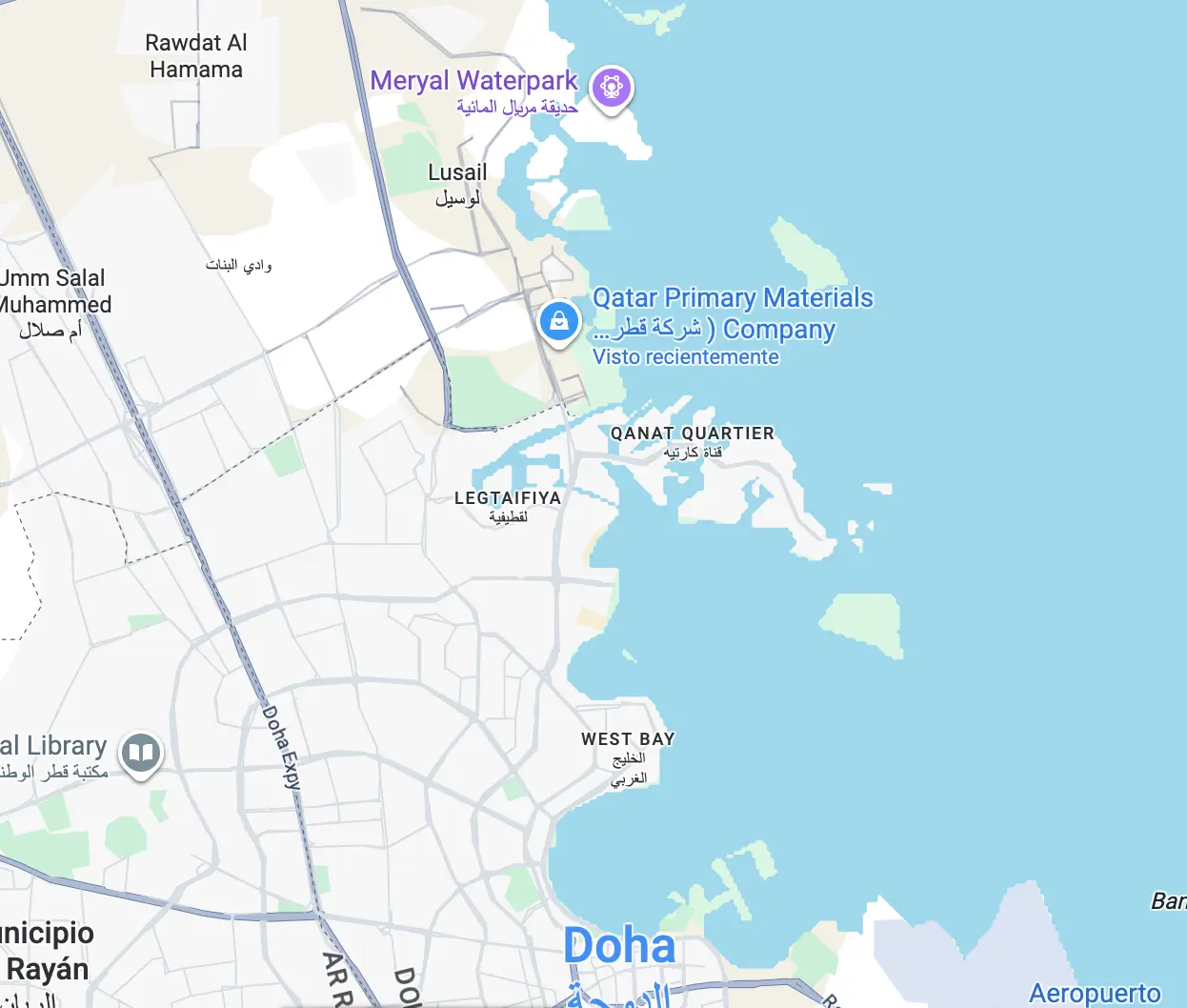
Illustrative sourcing map. Location markers are not verified supplier sites. This demonstration recycled aggregate is assumed to be sourced from local construction and demolition streams in Saudi Arabia.
Materials & Components
Batch declaration
Illustrative batch: RA-1026-B07; sample mass 1,000 kg; 95% recovered input.
Screening record
Indicative sieve grading and visual inspection at every 250 tonnes.
Supplier documentation
Example weighbridge tickets, pickup records and recovered-waste classification.
| Material | Share | Origin | Typical use | Details |
|---|---|---|---|---|
| Recovered concrete | 62% | Local construction & demolition | Structural subbase | |
| Reclaimed masonry | 20% | Demolition sorting | General fill | |
| Recycled stone | 13% | Infrastructure excavation | Subbase blend | |
| Corrective aggregate | 5% | Regional quarry | Grading adjustment |
Sustainability
Illustrative demonstration data — not verified product specifications, test results or certifications.
Mineral fractions may be recovered through conventional crushing and screening after use.
98%Recovered concrete, masonry and stone represent the majority of the blended material.
95%Illustrative share of mineral inputs redirected from disposal to beneficial use.
91%Estimated ability to retain value through local reuse and further recycling.
88%Environmental Impact Categories
Human toxicity — 0.006 CTUh (illustrative)
Screened mineral processing assumed to have low direct toxic releases. No measured assessment is available.
Respiratory particulate matter — 0.024 kg PM2.5-eq/t
Indicative dust-control scenario only. Water spraying and covered conveyors reduce emissions.
Photochemical ozone formation — 0.038 kg NMVOC-eq/t
Indicative diesel combustion and transport impact.
Ozone depletion — 0.000001 kg CFC-11-eq/t
Very small illustrative background supply-chain contribution.
Assessment boundary and assumptions
Cradle-to-gate scenario with local transport and nominal recycling facility energy use; not a formal LCA or EPD.
| Indicator | Illustrative value | Scope | Method | Status |
|---|---|---|---|---|
| Global warming potential | 12.8 kg CO₂e/t | Cradle to gate | Screening estimate | Demo |
| Freshwater use | 42 L/t | Production | Scenario estimate | Demo |
| Energy requirement | 7.8 kWh/t | Production | Scenario estimate | Demo |
| Particulate emissions | 0.024 kg PM2.5-eq/t | Life cycle | Scenario estimate | Demo |
Recycling
Illustrative demonstration data — not verified product specifications, test results or certifications.
Illustrative high recoverability for screened, uncontaminated mineral aggregate.
How is the score calculated?
Example scoring combines separation ease (95/100), recoverable value (95/100), available recycling processes (90/100), and material purity (80/100). This is not a standardized rating.
Waste Generated (illustrative per 1,000 t)
| Waste stream | Code / classification | Amount | Handling | Details |
|---|---|---|---|---|
| Ferrous metal scrap | 17 04 05 | 7 t | Metal recovery | |
| Timber / packaging | 17 02 01 | 3 t | Segregated recycling | |
| Oversized inert fraction | 17 01 07 | 42 t | Re-crush | |
| Fine mineral residue | 17 09 04 | 20 t | Controlled reuse / disposal | |
| Non-recoverable contamination | Varies | 5 t | Authorized disposal |
Illustrative batch IDs, grading records and origin declarations accompany the material lot.
Available data fields
Lot ID, incoming material source category, mass, grading range, screening date and quality-control status.
Inspect for contamination, segregate unsuitable fractions, crush if necessary and screen to application-specific specifications.
Operating precautions
Use suitable dust suppression, PPE, noise controls and licensed waste-management routes. Assess concrete with coatings or contamination before recycling.
Traceability
Illustrative demonstration data — not verified product specifications, test results or certifications.
Illustrative data completeness from recovery and processing through delivery and a future end-of-life pathway.
Illustrative movement through a local material recovery network in Saudi Arabia.