

مقالة | 12 دقيقة
Digital Product Passport example: what it looks like and how it works
October 26, 2026
في هذه المقالة
إن جواز سفر المنتج الرقمي is transforming how businesses manage and share information about their products. As European regulations introduce new requirements for transparency, traceability and sustainability, companies are increasingly looking for practical ways to connect physical products with reliable digital information.
However, understanding what a Digital Product Passport is does not necessarily explain how it works in practice. What does a DPP actually look like? What information can users access, and what does it take for manufacturers to turn existing product data into a functional digital passport?
In this article, we explore a practical جواز سفر المنتج الرقمي example, explain the technology behind it and examine the key aspects businesses need to consider when implementing Digital Product Passports across their operations.
What is a Digital Product Passport
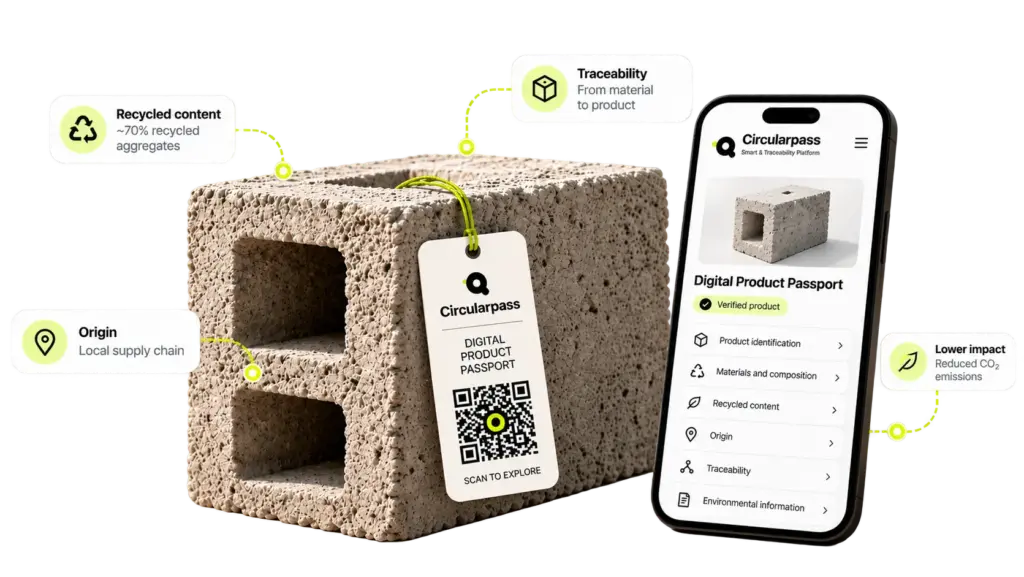
A جواز سفر المنتج الرقمي is a digital record linked to a physical product that provides structured information about its identity, composition, origin, environmental characteristics and lifecycle. By connecting this information to a unique product identifier, a DPP allows relevant stakeholders to access product data through a digital interface, often using a QR code or another suitable data carrier.
The concept forms part of the European Union's transition towards a more circular and transparent economy. Under the لائحة التصميم البيئي للمنتجات المستدامة (ESPR), Digital Product Passports are being introduced progressively for selected product categories, with specific information and implementation requirements established through the applicable legislation.
Beyond regulatory preparation, the DPP represents an opportunity for manufacturers, brands and supply chain operators to rethink how they manage product information. Instead of relying on disconnected certificates, technical documents and internal databases, businesses can develop structured digital records that make relevant information easier to access, maintain and exchange throughout the value chain.
For a more detailed explanation of the European regulatory framework and upcoming requirements, read our guide to the Digital Product Passport in 2026.
Digital Product Passport example: what does it look like?
One of the easiest ways to understand the practical value of a Digital Product Passport is to examine how it connects a physical product with the information generated throughout its lifecycle. Although the content of each passport depends on the product category, the underlying principle remains the same: providing access to reliable product information through a consistent digital identity.
To illustrate this, consider a construction manufacturer producing concrete blocks that incorporate recycled materials. Information about these products may be distributed across material specifications, supplier records, production documentation, environmental assessments and technical certificates. Traditionally, accessing or exchanging this information may require consulting multiple files or contacting different departments and suppliers.
A Digital Product Passport provides a more structured approach by connecting relevant product information to a digital record that can be accessed by the appropriate stakeholders.
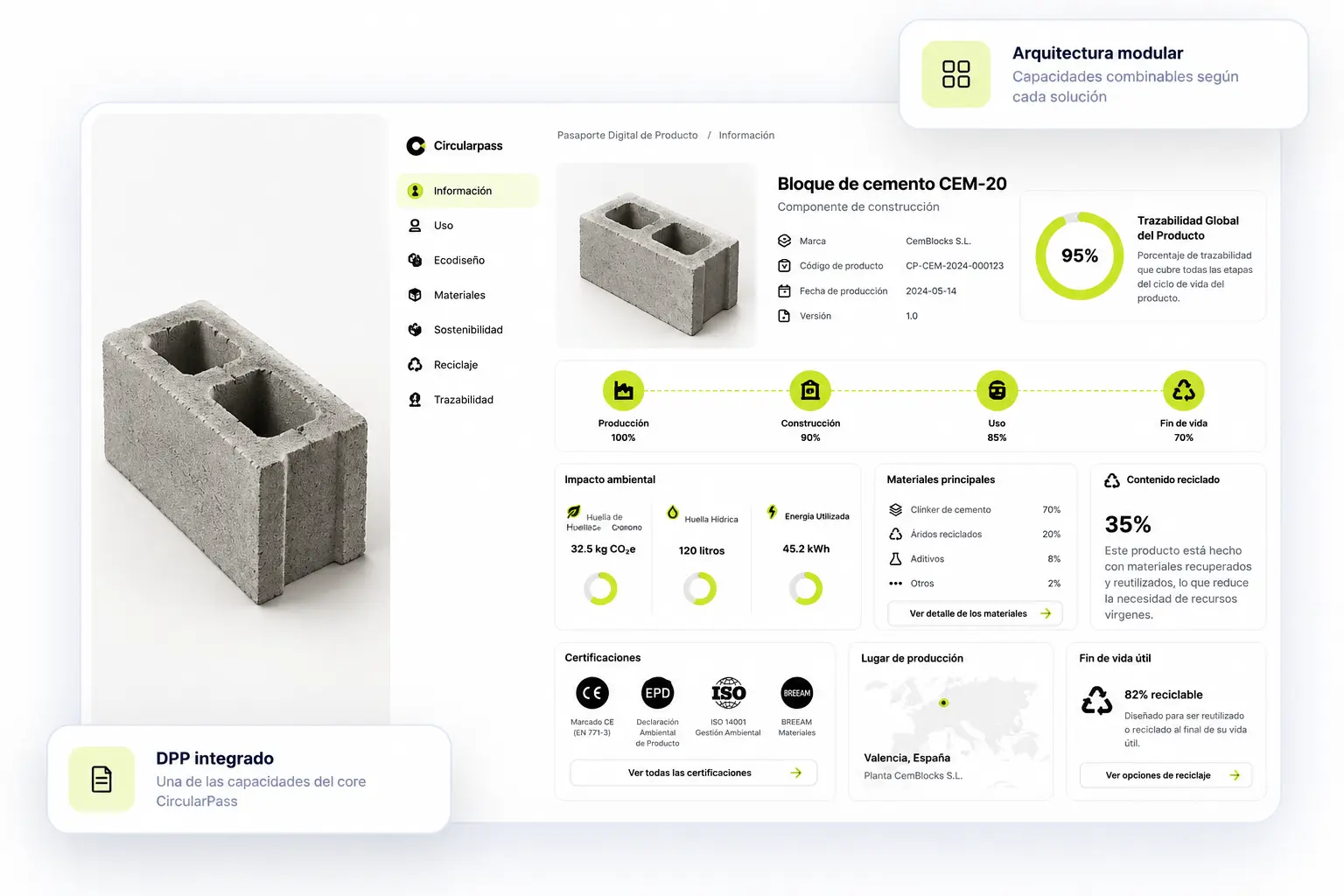
A practical Digital Product Passport example: A recycled concrete block
CircularPass features a Digital Product Passport example for a recycled concrete block, illustrating how digital product information can be presented through an accessible interface. This type of application is particularly relevant to the construction industry, where material composition, technical characteristics and environmental information can remain important throughout a product's long lifecycle.
Depending on the available information and the applicable requirements, a passport for this type of product could include its identification details, manufacturer, material composition, recycled content, origin and relevant technical documentation. It may also connect environmental indicators, supporting certifications and information that helps stakeholders understand how materials could be recovered or reused.
| Information category | Example of DPP content |
|---|---|
| Product identification | Product name, reference and unique identifier |
| Manufacturer | Manufacturer and relevant production details |
| المواد والمكونات | Main components and documented recycled content |
| التتبع | Available material origin and supply chain information |
| Environmental information | Relevant environmental indicators and supporting assessments |
| Technical documentation | Product specifications and applicable certificates |
| معلومات حول دورة الحياة | Information supporting reuse, recovery or recycling |
These are illustrative information categories rather than a verified inventory of the fields displayed in the CircularPass example. Mandatory DPP data depends on the applicable product-specific legislation.
What makes this approach valuable is not simply the ability to display product information digitally, but the possibility of connecting different sources of data through a common product identity. This helps transform information that would otherwise remain fragmented into a more accessible and useful resource for businesses and other stakeholders.
From a QR code to a complete digital product profile
In practice, accessing a Digital Product Passport can be as simple as scanning a QR code attached to a product, its packaging or accompanying documentation, according to the applicable requirements. The code connects the physical item to its digital identity, allowing users to retrieve the information associated with that product.
Once the digital interface is opened, different stakeholders can access information according to their needs and permissions. For instance, a customer may be interested in materials and environmental characteristics, while a manufacturer, repair professional or recycler may require more detailed technical information.
A Digital Product Passport is much more than a QR code. While the code provides an access point, the passport itself depends on structured product data, appropriate identification mechanisms and a digital infrastructure capable of managing information reliably over time.
By making product information more accessible and easier to interpret, this approach can strengthen transparency across the value chain while supporting more informed decisions about purchasing, maintenance, reuse and recycling.
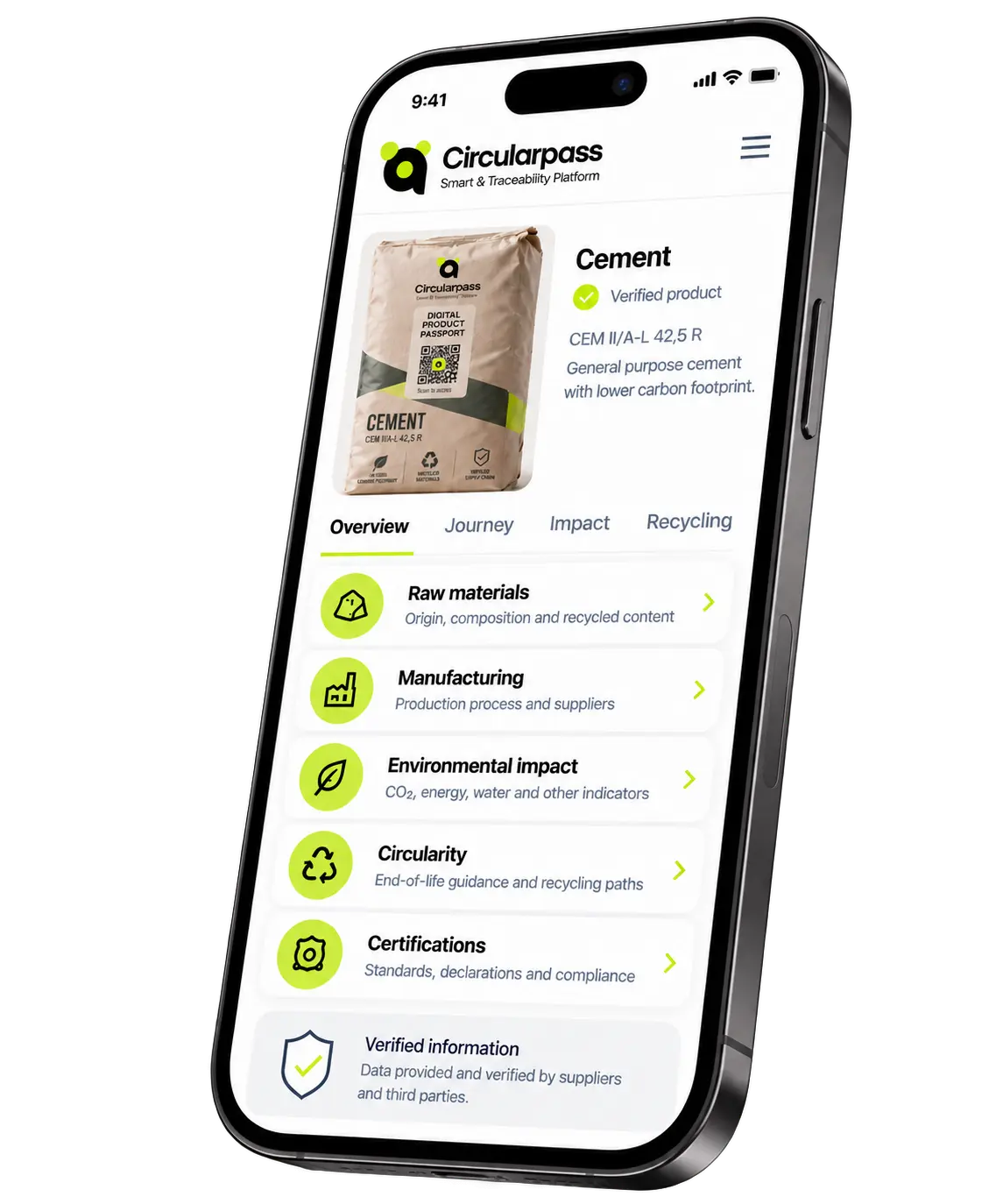
THE USER EXPERIENCE
One scan. A complete product profile.
A QR code identifies the physical product.
The passport organises product and impact data.
Relevant information supports better lifecycle decisions.
How does a Digital Product Passport work?
A Digital Product Passport operates by establishing a connection between a physical product and the digital information associated with it. Through a unique identifier and an interoperable data infrastructure, relevant stakeholders can access product information without depending exclusively on traditional documentation or isolated information systems.
Although the specific architecture may vary depending on the industry, the complexity of the supply chain and applicable regulatory requirements, a functional DPP relies on three fundamental elements: product identification, structured data management and controlled access to information.
Connecting physical products with digital identities
The foundation of a Digital Product Passport is the ability to identify a product consistently and connect it to the correct digital record. Technologies such as QR codes, NFC and RFID can support this connection, enabling physical products to become access points to their digital information. When combined with recognised identification standards, these technologies can facilitate interoperability between different systems and organisations.
Organising product data and traceability information
Once a product has a digital identity, relevant information can be connected to it from different sources, including manufacturing systems, supplier documentation, product databases and environmental assessments. Traceability technologies such as GS1 standards and EPCIS events can support these processes by enabling consistent identification and the exchange of relevant supply chain information.
Making relevant information accessible throughout the lifecycle
Different stakeholders interact with products for different reasons, and their information needs are not always the same. A Digital Product Passport therefore needs to support appropriate access rights and information governance, ensuring that relevant data can be shared without unnecessarily exposing confidential business information.
Ultimately, the purpose of a Digital Product Passport is not simply to digitise existing documents, but to create a reliable connection between products, information and the stakeholders that need to use it.
Key steps to implement a Digital Product Passport
Implementing a Digital Product Passport involves much more than creating a digital product profile or generating a QR code. It requires businesses to collect and structure information from different sources, establish reliable product identification mechanisms and ensure that data can be accessed, exchanged and maintained throughout the product lifecycle.
The complexity of this process depends on several factors, including the industry, the availability of product information, the structure of the supply chain and the regulatory requirements that apply to each product category. Although there is no single implementation approach that works for every business, the following five steps outline the key areas organisations should consider.
Identify the product and applicable regulatory requirements
Understand which products will require a Digital Product Passport and determine the regulatory framework that applies to them. Under the EU's Ecodesign for Sustainable Products Regulation (ESPR), specific DPP requirements are established progressively through product-specific legislation, meaning information requirements and timelines may vary between industries.
Collect and structure product information
Gather reliable information from across the product value chain. Relevant data may exist in ERP or PLM systems, supplier documentation, manufacturing records, environmental assessments and technical certificates, but it is often fragmented or stored in incompatible formats. Structuring this data consistently is essential to ensure that the DPP can support traceability and reliable information exchange.
Establish product identification and traceability
Assign the appropriate unique product identifiers and establish how they will be associated with products, batches or individual items. Using recognised standards and traceability technologies can help facilitate information exchange between different organisations while maintaining consistency across digital systems.
Develop the digital infrastructure and information access
Build a digital infrastructure capable of managing and making this information accessible to relevant stakeholders. This may involve integrating existing enterprise systems, connecting supplier data sources and establishing digital interfaces through which product information can be accessed using QR codes or other appropriate data carriers.
Validate, deploy and maintain the Digital Product Passport
Verify the accuracy and completeness of the information, test the identification and access mechanisms, and confirm that the implementation meets applicable requirements. Once operational, the DPP requires ongoing information governance to ensure data remains accurate, accessible and appropriately maintained.
Implementing a Digital Product Passport is not simply a technical project, but a broader process of connecting product information, supply chain traceability and digital infrastructure. Organisations that approach implementation strategically will be better positioned to address regulatory requirements while developing more transparent and interconnected product information systems.
How CircularPass helps you implement Digital Product Passports
For many businesses, implementing a Digital Product Passport involves more than selecting a technology or generating a digital product page. The main challenge lies in connecting information that already exists across different systems and organisations, ensuring that it can be accessed reliably and developing processes that remain manageable as product portfolios and regulatory requirements evolve.
ممر دائري addresses these challenges through an interoperable digital platform designed to connect product information, traceability and sustainability-related data. By bringing together complementary technological capabilities, it helps organisations establish a more structured approach to managing the information associated with their products.
Product information and traceability
CircularPass provides capabilities for working with product and material information alongside digital traceability records. Technologies including GS1-based identification and EPCIS events support the connection and exchange of information across different stages of the value chain — especially relevant for organisations managing complex material flows or working with multiple suppliers.
Interoperable Digital Product Passports
CircularPass combines digital product identification with capabilities for structured information management and access. Its platform supports technologies such as QR codes, NFC and RFID, alongside integration options for existing business systems, verifiable credentials, environmental indicators and sustainability reporting.
Turning product information into business value
Digital Product Passports create opportunities that go beyond regulatory compliance. When product data is structured and connected, it can support more transparent relationships with customers and suppliers, better-informed operational decisions and circular business models based on improved material information.
CIRCULARPASS PLATFORM
Start building your first Digital Product Passport
For manufacturers and other organisations preparing for upcoming requirements, developing a first Digital Product Passport can be a practical way to assess data readiness, test information flows and understand the opportunities of connected product information.
Discover the solutionمقالات ذات صلة

لائحة PPWR: ما هي، المتطلبات الرئيسية، وكيف تؤثر على الشركات
تعرف على ما يتطلبه نظام PPWR، ومتى ينطبق، والشركات التي تتأثر، وكيفية إعداد بيانات التعبئة والتغليف للامتثال.
Digital Product Passport example: what a DPP looks like and how it works
See what a Digital Product Passport looks like in practice, what information it can contain, and how companies can prepare and implement their first DPP.
جواز السفر الرقمي للبطاريات بموجب لائحة البطاريات الأوروبية: المتطلبات وكيفية الاستعداد لعام 2027
تعرف على ما هو جواز سفر البطاريات الرقمي، وما يتطلبه نظام الاتحاد الأوروبي للبطاريات، وكيف ينبغي للشركات الاستعداد لعام 2027.